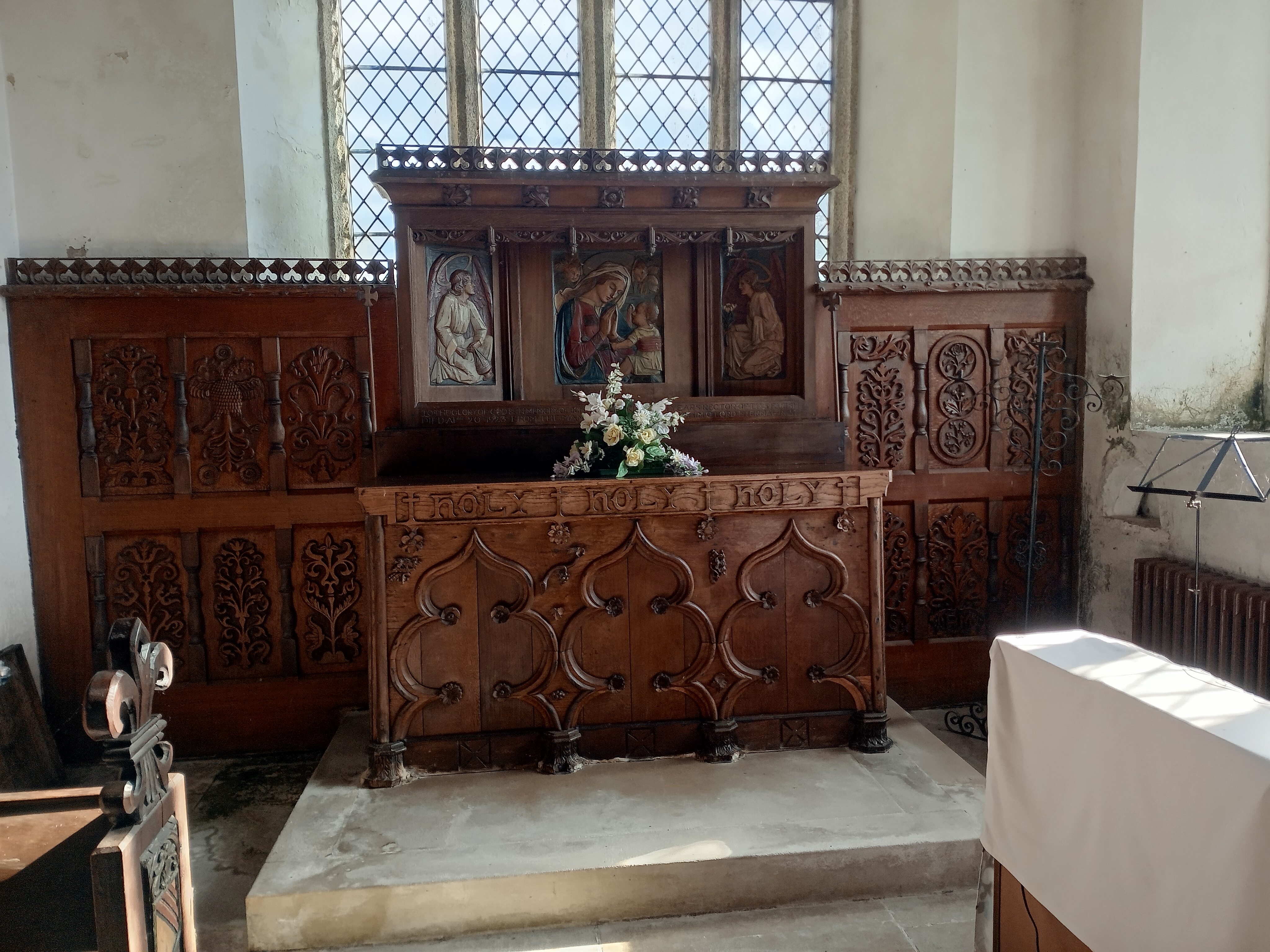
The text of a sermon preached at St Marnarch’s Church, Lanreath and at St Ildierna’s Church, Lansallos, Cornwall on Sunday 4th October 2026.
The set readings were, Exodus 201-4, 7-9, 12-20 Philippians 34b-14 Matthew 2133-46
Jesus is now in Jerusalem. His purpose in coming to Jerusalem is to fulfil his destiny. He knows, as we do, that he must die and that he will rise again. The character of the events in his story in Matthew’s gospel are now quite different from the way they were prior to his arrival in the city.
In his Galilean ministry he had been an itinerant teacher, healer and miracle worker. There were many such individuals in the Jewish society of this time. Jesus, of course, has got himself noticed because of the authority with which he preaches, in the main about the Kingdom of heaven, the power he exercises in performing miracles and the remarkable acts of healing. He has stood out from the crowd, and attracted a large following.
In the city things are a little different. It’s so busy and full of people who catch the attention that he might have been easy to overlook. But Jesus makes sure that that doesn’t happen.
Already he’s been greeted by ecstatic crowds, he’s overturned the tables of the moneychangers and the sellers of doves. He’s made sure that he gets himself noticed.
The chief priests and the elders of the people have certainly noticed him. They challenge him to justify his actions but he turns the tables on them – and in last week’s gospel we read the parable of the two sons which is critical of the religious leaders.
And that criticism is to be a key feature of Jesus’ actions in Jerusalem. His parables are loaded now with criticism and scorn for the religious authorities.
And so, today, we have the parable of the wicked tenants.
The parable begins,
There was a man, a landowner, who planted a vineyard; he fenced it round, dug a winepress in it and built a tower; then he leased it to tenants and went abroad.
The chief priests and elders, hearing this introduction, would instantly have recalled a passage from the prophecy of Isaiah (51) where he says,
My beloved had a vineyard on a fertile hillside. He dug it over, cleared it of stones, and planted it with choice grapes. In the middle he built a watchtower, he hewed a press there too.
And recognising that passage from Isaiah, they would immediately know that Jesus, like Isaiah, is talking about the people of Israel. The vineyard is a common image for God’s people.
And knowing that they would also work out very quickly that the landowner represents God and the servants who are so ill-treated by the tenants are the prophets and that the tenants are the religious leaders themselves. And the son? Well we know that he is Jesus, but the priests and elders would not know that yet.
This parable is deeply critical of the priests and scribes and elders – they’ve persecuted the prophets and exploited the people, and will kill the Son. It is no wonder that they would have liked to arrest him then and there. It is only their fear of the people that prevents them from doing so. But, perhaps if they allow Jesus enough rope, he’ll hang himself. Surely he’ll make a wrong step.
Little wonder then that these parables of Jesus, directed at the religious leaders, are the beginning of a final journey towards the cross and resurrection. But there’s a way to go yet. Even so we can see the pattern that is developing and how Jesus appears to be in complete control of his destiny.
We can understand how this all fits into the story of Jesus’ life, death and resurrection. But it is the few verses that follow the parable that have the key lesson for us today.
Jesus says to his hearers, the priests and elders, quoting another verse that they will be familiar with, this time from the Psalms (118),
Have you never read in the scriptures: The stone which the builders rejected has become the cornerstone; this is the Lord’s doing and it is amazing in our eyes?
They feel secure in their positions. However, the respect, the authority, the influence that they hold is not as sure and certain as they imagine. It can all be taken away from them in favour of others who, says Jesus, will produce the fruit of the Kingdom.
This warning is clearly addressed to the priests and elders, but its implication is clear for any who claim true discipleship or a sure and unshakeable faith.
Those who claim to be part of God’s Kingdom are called – and expected – to bear fruit. And those who fail to do so risk being rejected and replaced.
As people of faith we can become very comfortable in our way of life. We can attend Church regularly; we can say our prayers; we can read our bibles; we can give of our time and money to the work of the Church and the care of those in need. Everything can feel just right. We are very comfortable in our Christian life.
But those priests and elders, of whom Jesus is so critical, could say the same.
This parable is addressed, of course to the religious leaders of Jesus’ day, but it is addressed to us too.
Religious observance, religious faith, can very easily become outward show. But when it does the only person who does not see that that is the case is ourself. We can so easily go through the motions, while failing to allow our faith to make us the new people we need to be becoming.
The truth is it is not outward appearance that makes us who we are but what is in our heart. It is what is in our heart that makes us bear fruit.
And what is the fruit? Well, Paul has helped us out here. In Galatians 5 he lists the fruit of the Spirit.
The fruit of the Spirit is love, joy, peace, patience, kindness, goodness, trustfulness, gentleness and self-control.
And in today’s reading from Philippians he writes,
what were once my assets I now through Christ Jesus count as losses. Yes, I will go further: because of the supreme advantage of knowing Christ Jesus my Lord, I count everything else as loss. For him I have accepted the loss of all other things, and look on them all as filth if only I can gain Christ.
We bear the fruit of the Kingdom when we allow the Holy Spirit to shape our lives, and all our hope is placed in Christ Jesus, and know him as our Lord.
It sounds easy – and in a sense it is. But we need to be alert to be sure that we do not fall into the trap of simply going through the motions. We need to keep our faith fresh and focussed on Jesus.


Leave a Reply