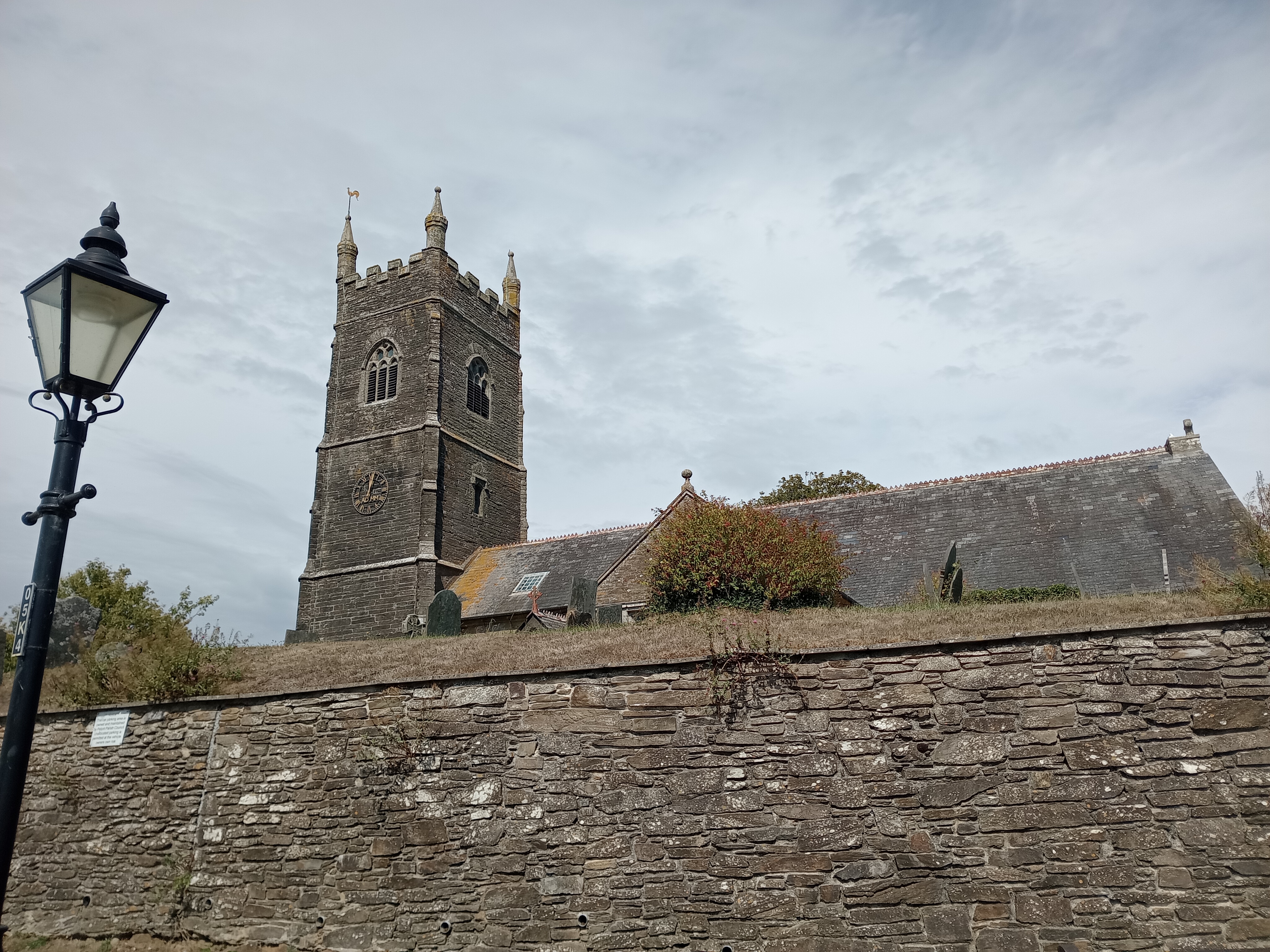
This is the text of a sermon preached at St Nun’s Church in Pelynt, Cornwall on Sunday 27th September 2026
The set readings were, Exodus 171-7 Philippians 21-13 Matthew 2123-32
Let’s give this morning’s gospel reading a little context by looking back to what had just happened in Matthew’s gospel.
Immediately after Jesus enters Jerusalem riding on a donkey, greeted by the crowds who laid coats and palm branches in his path and shouted Hosanna, he went into the temple.
In the temple he drove out the traders, turned over tables and chairs. He chastised those who were buying and selling with the words, my house will be called a house of prayer; but you are making it a bandits’ den.
There can surely be no doubt that this was a provocative act calculated to get a response from the religious leaders. How could they possibly stand by and let him get away with this?
The entry into Jerusalem marks a significant change in Jesus’ ministry. There are still parables, there is still teaching but few miracles or acts of healing.
The parables have an edge that they had not had before. They are now specifically directed at the religious leaders – and they are critical; damning even.
It’s almost as if, in overturning the moneychangers’ tables, Jesus is making sure that the authorities know that he is in the city and he’s not taking the chance that they’ll ignore him. They have to take notice.
And, if that was the plan, it worked. Straight away the chief priests and elders of the people confront him,
By what authority do you do these things? And who gave you this authority?
It’s a subtle approach. No temple police or soldiers. Just a simple question. They are giving Jesus a chance to justify himself; to open a dialogue. But they are also laying a trap for him. If his answer to the question makes claims of divine authority they will be able to discredit him as a blasphemer and silence him.
But Jesus, says that he will only answer if they, in turn answer the question he asks them. It is a question that they cannot answer without cost to themselves,
John’s baptism: what was its origin, heavenly or human?
Their answer, that they do not know could have been the end of this confrontation, except that Jesus tells this parable of two sons asked to work in their father’s vineyard. One says that he will not, but reconsiders and goes to work; the other says that he will but does not do so.
And then another question,
Which of the two did the father’s will?
The answer is simple. It’s obviously the son who went and worked in the vineyard. But in answering it, unwittingly, they invite strong criticism from Jesus.
They are like the son who said that he would go but then didn’t. They are supposed to be the nation’s religious leaders but they would not listen to John even though the ordinary people – and even sinners, the tax collectors and prostitutes – welcomed his message. As coming from God, with enthusiasm.
They have failed to recognise that there was a prophet among them. They are not open to God’s calling – they, the people who should be most open to it.
This had been a consistent message through the history of the people of Israel – criticism of the religious and civil leaders for failing to respond to God’s messages though the prophets.
But it gives us no reason to feel self-satisfied. We should not pat ourselves on the back for our faithfulness. Rather we should be asking ourselves,
What is God saying to our generation? Who are the prophets of today? What are we not hearing? How are we failing to respond to God’s call?
Of course, prophets have always been hard to live with. Their messages are unwelcome – especially to those who exercise power and authority.
Jeremiah was imprisoned for his message, Elijah was hounded by Ahab and Jezebel, escaping only through God’s protection. John the Baptist was imprisoned and beheaded for speaking out and challenging the actions of the people of his day, and particularly king Herod. Others of the prophets suffered similarly.
There have always been – and always will be – prophetic voices. The problem for us is now, as it always has been, discerning whose are the voices we need to listen to. Who genuinely has words from God for us?
Looking back, with the benefit of hindsight, we can see who some of those voices belonged to. Desmond Tutu and Nelson Mandela opposing apartheid in South Africa. Elizabeth Fry and her work to reform the treatment of prisoners. William and Catherine Booth, founders of the Salvation Army, and their ministry to the poor. Thomas Barnardo of Barnardoes, caring and campaigning for orphans and children in poverty. You’ll think of others.
But what of today? What voices should we be listening to?
I make a few, very tentative, suggestions. You may not agree. I may be mistaken in thinking that they are prophets, but they each display some of the characteristics of prophets.
But, before I reveal those names perhaps we should take a few moments to think about what a prophet is.
What a prophet is not is someone who predicts the future. A prophet is a person who looks at the world and discerns what God is saying to the world. The prophet gives words from God about the need for repentance and renewal, and warnings about the consequences of disregarding the will of God. This ministry is what makes prophets so compelling and yet so unpopular.
So here are my few names of people we might consider whether or not they are the prophets of our age.
Greta Thunberg, the climate activist. There is lots about her that looks like the actions of a prophet. She might be irritating or annoying. But that does not mean that she is wrong – and she certainly has a message for us.
Malala Yusufsai the Nobel prize winner and human rights activist who advocates for education for women and children in Pakistan. She was shot for her activism while still at school. She challenges us to think about how we value all human life.
Feargal Sharkey who campaigns against the dumping of sewage in our rivers and seas.
The Rev’d Sue Parfitt, who has campaigned for climate action and Gaza. She was arrested for carrying a placard saying, I oppose genocide. I support Palestine Action, and again for taking a hammer and chisel to the case containing the Magna Carta in Salisbury Cathedral to highlight the climate crisis.
There is a case to be made for all of these people. There is a case to be made against them. Prophets are not easy people to live with. They unsettle people because of their insistence to make their message heard.. They unsettle societies and nations.
I met Sue Parfitt on a number of occasions. She married the vicar of the parish in which I served my second curacy. She can is charming but she can also be difficult, opinionated, challenging, combative, does not suffer fools – but she is often right.
I close this morning with a couple of quotes from her.
Of her activism,
The point is to make the best use of your latter years. And what could be a better use than trying to save humanity from extinction?
Of her arrests (there have been more than twenty),
The early Church was breaking the law all the time. So was Jesus.


Leave a Reply