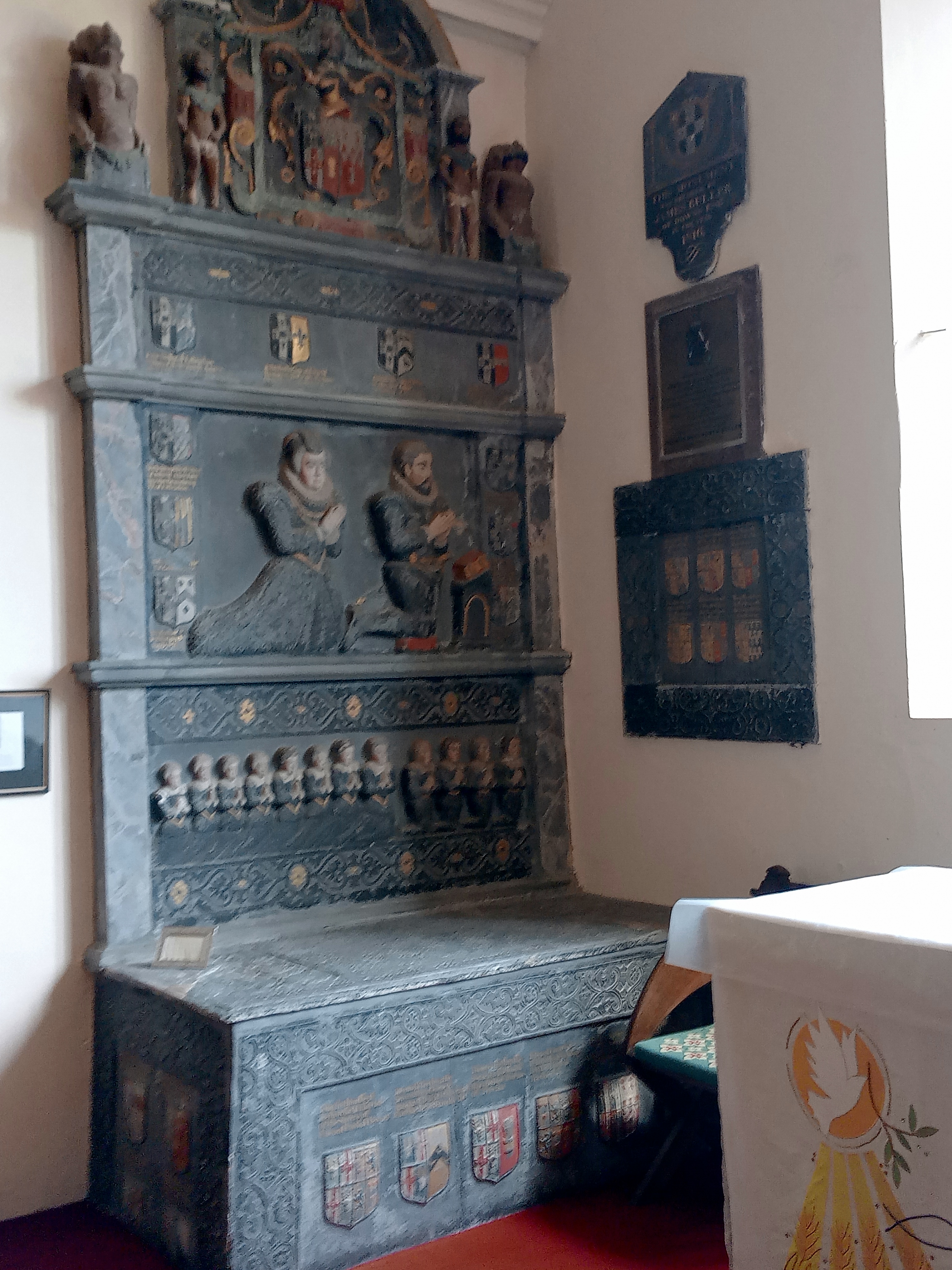
This is the text of a sermon preached at St Nun’s Church, Pelynt, Cornwall.
These were the set readings, Genesis 371-4, 12-28 Romans 105-15 Matthew 1422-33
Courage! It’s me! Don’t be afraid.
These are words from today’s gospel reading. They are the words that Jesus says to his disciples when they are terrified by the sight of him walking across the water towards them. Well, you would be – there’s a storm raging and there is a figure they take to be a ghost walking across the water towards them. It would be a brave person indeed who would have no fear in a situation such as this.
It would, no doubt, have been terrifying enough just to be in a small boat in the storm, especially at night, shortly before dawn – the darkest part of the night – and then to see a ghostly figure, which they are unable to make out clearly. Is it a rock, is it a sea monster, are their eyes deceiving them? Of course they’re terrified.
And so, Jesus’ first action is to reassure them, Courage! It’s me! Don’t be afraid.
But let’s roll back the story a little. Jesus, hearing of John the Baptist’s death has sought a little quiet and sailed, with his disciples, to the other side of the lake. The crowd catch up with him and he heals their sick and, towards the evening feeds them miraculously with the five loaves and two fish. Consequently he still needs that time of quiet and, having fed them, he sends the crowds away and instructs the disciples to get into the boat and return to the other side of the lake. Jesus now finds his quiet time and goes up into the hills to pray. At last alone. With God the Father.
Jesus often does this in the gospels – he goes away alone, often at night, to pray. These times of prayer often happen at significant moments in his ministry – at the outset in the wilderness following his baptism; when he chooses his disciples; at the Transfiguration; in the garden of Gethsemane. He walks constantly with God but also has these special moments with his Father – and this is one of those moments. And we’ll see why in a minute.
Back to the lake. Jesus comes down from the hills and, as dawn approaches, walks across the water towards the boat. Having been reassured by Jesus, Peter answers,
Lord, if it is you, tell me to come to you across the water.
Jesus calls him, Come! And Peter steps out of the boat and walks across the water – until he thinks about what he’s doing and the risk he is running. Then he starts to sink and cries out to Jesus,
Lord, save me!
Jesus stretches out his hand to him and holds him up, saying,
You have so little faith; why did you doubt?
When, together, they climb into the boat the storm subsides. The disciples worship him and say,
Truly, you are Son of God.
Let’s unpack all this a little bit. There’s such a lot here; so much that we won’t see all of it today.
The first thing to say is that this is not a story of the ordinary, everyday experience of Jesus and his disciples. Something remarkable is happening here. Clearly, we’re meant to take notice and reflect carefully on this event.
We’re so familiar with the story of Jesus walking on the water that the sheer strangeness of it tends to pass us by a bit. But for a moment let it sink in. Jesus actually walks on the surface of the water – in a storm!
Perhaps this is telling us that Jesus has control of creation. This must surely be happening so that his disciples – and we – see Jesus in a new light. Not just a great prophet or religious teacher. Not a healer and miracle worker. He has control over creation. Remember how John speaks at the beginning of his gospel of the Word through whom not one thing came into being except through him. Does this open up for them – and for us – the idea of Jesus as Lord of all Creation?
Then when Jesus says, It’s me. Our translations don’t catch the full meaning. The Greek text is εγω ειμι and simply means I am, the words that John uses in the I am sayings in his gospel, all related to his divine nature – I am the bread of life; I am the true vine; I am the good the shepherd and so on.
But it is also reminiscent of the name that God gives to Moses when he reveals himself in the burning bush I am who I am; say, I am sent you.
Again perhaps we are to think that Jesus is more than preacher, or healer, or prophet.
And now when Peter, himself walking on water, starts to sink he calls out Lord, save me! Appropriate to the moment, of course, but a cry that echoes down the ages in mouths of penitents calling on Christ Jesus to forgive and save.
When Jesus asks Peter why he doubted does he mean self-doubt or does he mean doubt in Jesus to enable Peter to walk on water? I honestly don’t know, and what I am about to say might be completely wrong.
But I think Jesus is asking whether Peter really believes that with Jesus he – Peter – can do anything. It’s not about what Jesus can do in Peter, but what Peter can do in Jesus. They sound very similar but there’s a world of difference.
And, as they climb into the boat, the storm abates. And then the most remarkable thing of all happens.
“The men in the boat worshipped him and said, “Truly, you are the Son of God”
Jesus is given this title on only one other occasion in the gospel – by the centurion at the foot of the cross as Jesus dies.
Of course, that Jesus is the Son of God is not news to us. We know that; it is at the very heart of all that we believe about him. But it is that last verse that allows us to make complete sense of this whole story. All of this can only happen because Jesus is the Son of God.
It is the first – and only – time in the gospel that the disciples acclaim Jesus as such, and all the more significant for that.
So, this story, so familiar to us, tells of a God, who became human and lived among us. He had control over creation; he reassures his disciples because, in his words, I am; with him his disciples can do anything, even walk on water – until they doubt; when they call on him to save them, he does just that; in the moment of these events they disciples see him as God and worship him.
In this story Jesus reveals himself to his closest associates – the Twelve – as he never has before, and will not again until his resurrection. For those disciples it’s a crucial moment in their growing understanding of who Jesus is. They’ve heard his teaching; they’ve witnessed his healings; they’ve seen the miracles. But this is on a new level and draws a striking response from them.
But this story is recorded here for us. How do we respond to the story of Jesus walking on water? Does he reveal himself to us as the Son of God? Is he the one that we turn to be saved? Do we believe that we can do anything with him, or are we too full of doubt?
These are questions that only can answer for ourselves but we have seen how other lives have been touched and renewed before us – and perhaps we, in our turn, have touched other lives again. Have we come in our lives to that moment where we have worshipped him and said, “Truly, you are the Son of God”


Leave a Reply