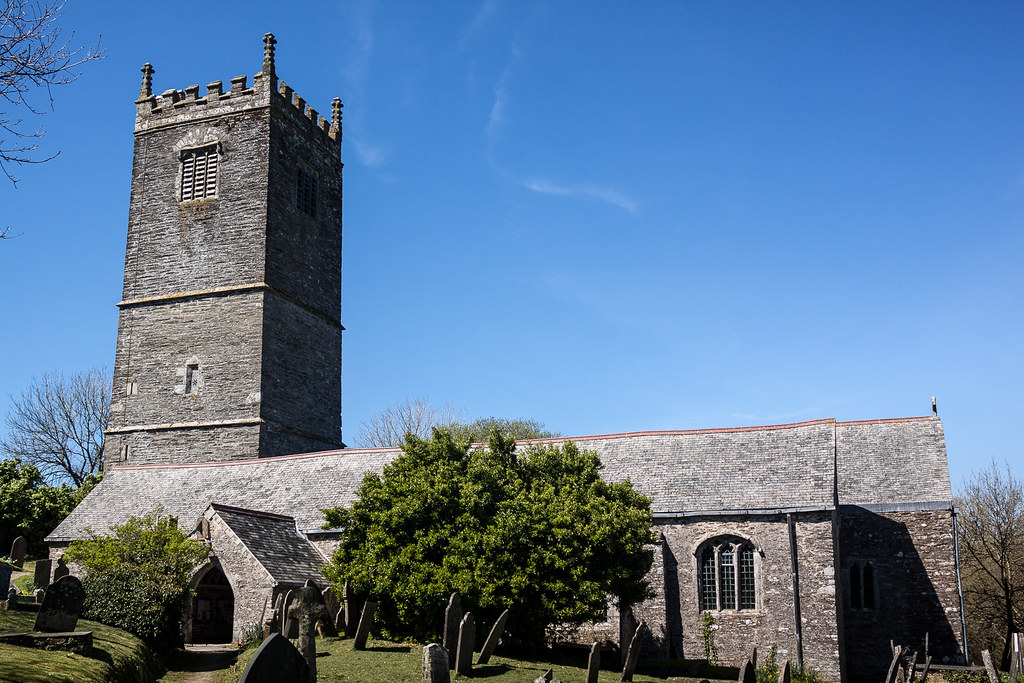
This is the text of a sermon preached at the Church of St Wyllow, Lanteglos-by-Fowey on 20th July 2025
Amos 81-12 Colossians 115-28 Luke 1038-42
There is a legend about Martha and Mary that was popular in the Middle Ages. It tells how, after the resurrection Martha and her sister Mary travelled to France where they preached the gospel. The sisters went to a small town which was being troubled by a dragon. Martha manages to slay the dragon and in doing so the whole town is converted to Christianity. On the same trip Mary sets up a monastery in a remote area of wilderness.
Martha is an activist and Mary a contemplative.
We see much the same being played out in this morning’s gospel reading. There’s no dragon, of course, and no monastery either but Martha is the doer and Mary the listener.
A first reading of this gospel story appears to show Mary as the one who is making a right choice and Martha is the one who misses the point, and makes a poor choice. We instinctively feel sympathy for Martha, having to do all the work while Mary just sits listening to what Jesus has to say. But, have we got that right? Is that what this story is about?
Our gospels recently have been considering what it means to be a disciple. Two weeks ago we heard how Jesus sent out seventy disciples to proclaim the good news. Last week we heard the parable of the good Samaritan revealing what it means to love God and neighbour. And this story of Martha and Mary is also about discipleship – although that is not how it appears at first sight.
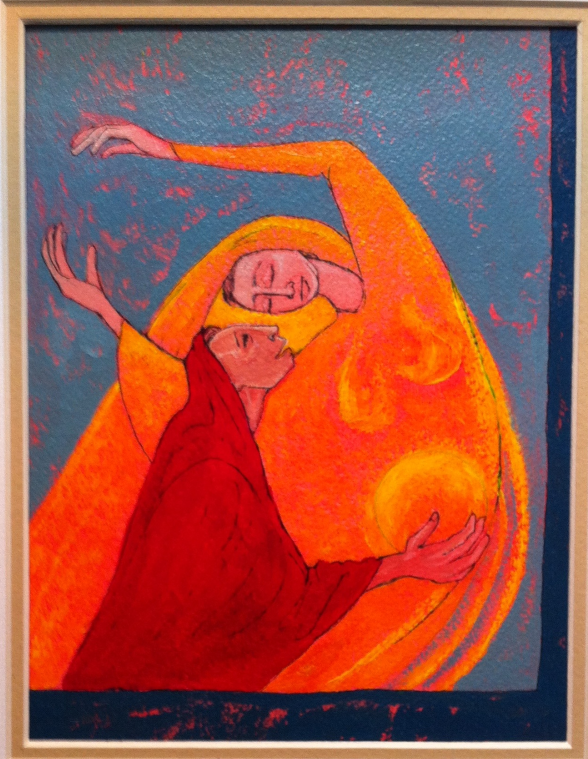
As Jesus enters the village Martha welcomes him to her home. As you would with a guest she makes him comfortable and sets about preparing a meal. Mary meanwhile settles herself down at Jesus’ feet and listens attentively to what he has to say. When Martha complains that she is being left to do all the work Jesus answers,
Martha, Martha, you worry and fret about so many things, and yet few are needed, indeed only one. It is Mary who has chosen the better part, and it is not to be taken from her.
All we are told about Mary here is that she sat down at the Lord’s feet and listened to him speaking. This description is typical of the disciple, the one who learns from the teacher. Mary is learning from Jesus in order that she might be active in witnessing.
This is a theme in Luke’s gospel. We read about the disciple who builds his house on the solid foundations of rock, rather than sand and is praised (646-49). In the parable of the sower it is the seed that falls in the good soil that thrives and grows (815). Jesus speaks of his true family as being those who hear the word of God and do it (821). Jesus says, Blessed rather are those who hear the word of God and keep it in response to the woman who shouts to him, Blessed the womb that bore you and the breasts that you sucked (1127-28).
It is clearly the duty of the disciple to learn from Jesus and then to act. Here it is Mary who is doing that as she sits at the feet of Jesus. But Martha is acting. She has practical activities which show her devotion to Jesus.
There is no criticism implied of Martha. She acts and acts well in serving the meal. She is showing hospitality and welcome. She is meeting Jesus’ physical need of refreshment. She is showing him kindness.
However, Martha is being distracted by all the things she feels that she needs to do. She needs to consider what is best to do – to rush around setting the table, preparing food and drink or perhaps to spend time with her guest, talking and listening. That is what Jesus reminds Martha about. Her challenge from Jesus is to consider what is distracting her, what is keeping her from exercising her discipleship well. It’s about getting the priorities right.
But, we do not hear the end of this story. What does Martha choose to do now. Does she go back to the kitchen, muttering under her breath that no-one helps her, that she has so much to do, while Mary just sits at Jesus’ feet, and Jesus only encourages her, and nobody understands her. Or, does she pour the wine, put the nuts and crisps on the table and settle down next to her sister?
We meet Martha and Mary again – in John’s gospel. When Jesus raises Lazarus it is Martha who comes out to meet him, and chides him for delaying his journey until Lazarus has died, but expressing faith that Jesus could have saved her brother. And, when told that Lazarus will rise again and that Jesus is the resurrection and life professes her faith in Jesus, Lord, I believe that you are the Messiah, the Son of God, the one coming into this world. Martha has a strong faith. She knows who Jesus truly is – perhaps better than Mary.
And again a few days later when Mary pours the ointment on Jesus’ feet and wipes them with her hair, it is Martha who has prepared the meal and has waited on them.
Martha has a deep and strong faith, and puts her trust in Jesus, but she is also one of life’s busy people. She is a doer, she is driven and an activist. Mary, on the other hand, is contemplative, a listener.
These are the two sides of the coin of discipleship. Contemplation, reflection, putting ourselves in the presence of Christ in prayer, silence and stillness is important. It is a necessary part of being a follower of the Way. But on its own it is not enough.
We also need to be active. Caring for the needy, feeding the hungry, campaigning for justice, healing the sick, making people whole.
The one without the other is an empty, incomplete faith.
This story reveals the importance of the contemplative life but it does not raise it above the active life in importance, because both are needed.
If we read this story of Martha and Mary as a rejection of Martha’s way and a promotion of Mary’s way we misread it.
Most of us are either, by nature reflective and contemplative or busy and active. And most of us will focus on the one more than the other. That’s OK. But if we get distracted by many things, or become so engrossed in contemplation, we miss the point.
If our contemplation and reflection does not lead us into action. And our activity does not drive us to prayer and contemplation we will be poor disciples.
God is calling us to both, just as Jesus called Martha to both in this short story.
 exultemus