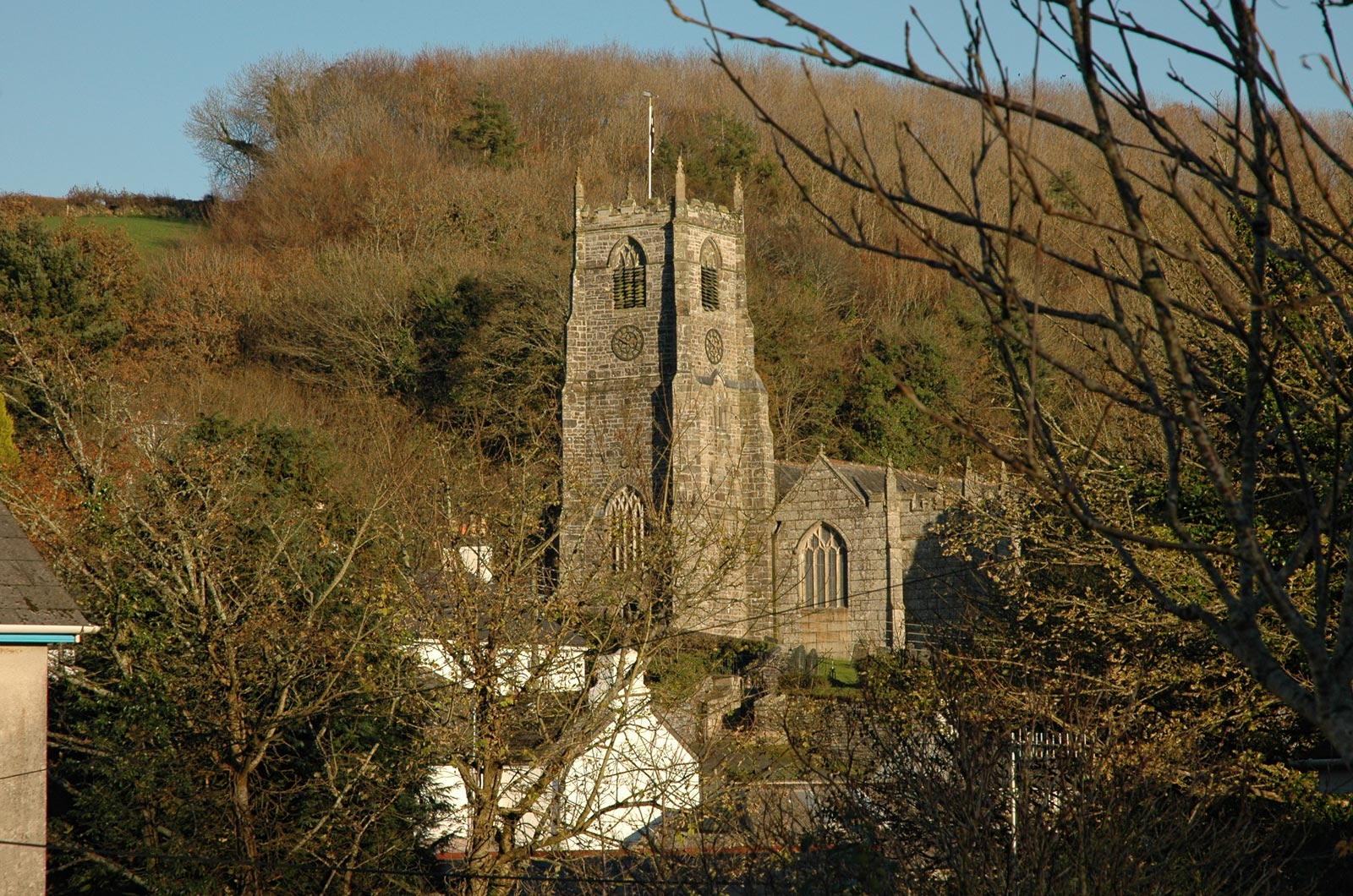
This is the text of a sermon preached at the churches of St Bartholomew, Warleggan and St Neot, Cornwall for the Fifth Sunday after Trinity, July 5th 2026.
The set readings were, Gen 2434-38, 42-49, 58-67 Romans 715-25a Matthew1116-19, 25-end
There’s just no pleasing some people. You know who I mean. Nothing you suggest is ever good enough. Nothing you do is ever what they want. When you ask them what they want to do they say, “Oh, I don’t mind, you choose.” And then, when you take them to the museum they come over all bored and grumpy because they would much rather have gone to a nice garden.
Children, of course, can be like this. And Jesus uses children as an example, not of how annoying children can be. You expect children to be like that. But Jesus makes it clear that he’s talking about how impossible the Pharisees and scribes are to please,
What comparison can I find for this generation? It is like children shouting to each other as they sit in the market place: We played the pipes for you, and you wouldn’t dance; we sang dirges, and you wouldn’t be mourners.
Some children want to play one game, others a different one. They gently mock each other because they can’t agree whether to play weddings or funerals (not games I remember as being particularly appealing) but a squabble has developed over what game to play.
Then Jesus spells it out for the listening crowd,
For John came, neither eating nor drinking, and they say, “He is possessed.” The Son of man came, eating and drinking, and they say, “Look, a glutton and a drunkard, a friend of tax collectors and sinners.” Yet wisdom is justified by her deeds.
John and Jesus bring essentially similar messages but the people who most need to hear that message will not listen and hear what they have to say. John, they say, is too ascetic – a bit of a weirdo, no fun at all, and miserable with it. But Jesus is the exact opposite – a real party animal – and look at him, eating and drinking as if there were no tomorrow. John is too serious – and Jesus, not serious enough. I guess if they’d been somewhere in the middle they’d have been neither one thing nor the other.
But, suggests Jesus, they’re looking at the wrong things. They’re missing the message by being too concerned about the messenger. And in a section omitted from today’s gospel reading Jesus tells them that if the message that both John and Jesus are delivering had been preached in Sodom, and he goes on to list some other, equally sinful, places, they would have repented.
But the good news that Jesus brings is not for the learned and clever; it is for little children. It is for the simple and those who respond with eager faith, those who hear with fresh ears, who are open to what is new and different and exciting – and even, perhaps especially, to what is truly radical.
In Matthew’s gospel Jesus’ first piece of teaching is the great instruction we know as the Sermon on the Mount which begins with the Beatitudes, the blessings on those who are sidelined by the world but who populate the kingdom of Heaven,
How blessed are the poor in spirit…
Blessed are the gentle…
Blessed are those who mourn…
Blessed are those who hunger and thirst for uprightness…
Blessed are the merciful…
Blessed are the pure in heart…
Blessed are the peacemakers…
Blessed are those who are persecuted in the cause of uprightness…
These are the first words of teaching from Jesus in Matthew’s gospel. And it feels like this is his manifesto for all that he has to say and do in his ministry on earth. These are the words that will help us to make sense of it all. But they are also words that should set our agenda for how we speak to and serve the world. Words that teach us how we can be growing his kingdom, here and now.
And that is never more true than here as Jesus says,
I bless you, Father, Lord of heaven and of earth, for hiding these things from the learned and the clever and revealing them to little children.
This message, this good news of Jesus – and of John – is entrusted, not to the powerful, or those in authority, or the wealthy, or the clever – they would only mess it up, turn it to their advantage, use it, as they always have to oppress the poor, the weak and the powerless, and to enrich themselves. But the message of Jesus is entrusted to little children or to those who will receive it like a child.
The children, the weak, the simple, the oppressed, the outcasts get what Jesus is saying while the clever and powerful, the wealthy and the influential entirely miss the point. They simply don’t get it. It’s as if Jesus is speaking in an impenetrable foreign language. It makes no sense to them.
The gospel for Jesus is not about what we believe. Jesus wants us to understand that it is what we believe that affects the people that we are. Nothing reveals what our beliefs are more clearly than the way we act towards others.
Do you remember those Beatitudes I spoke of earlier? They are all about turning the world upside down.
The poor in spirit will be invited into the kingdom of Heaven; the gentle shall own the earth; the mourners will find comfort; the victims of injustice will receive justice; the merciful will experience mercy; the pure in heart will see God; peacemakers are the children of God; those who are persecuted will inhabit the kingdom.
All those who are oppressed or weighed down by burdens will find those burdens lifted and be truly blessed.
Our gospel today ends with well known, and loved, words; the Comfortable Words of Jesus,
Come to me, all you who labour and are overburdened, and I will give you rest. Shoulder my yoke and learn from me, for I am gentle and humble in heart, and you will find rest for your souls. Yes, my yoke is easy and my burden light.
This is essentially the same promise that Jesus made in the Beatitudes. Burdens will be lifted, loads shared, rest and peace for all who have never known it before.
The good news that Jesus proclaims is never about what we believe, but about how we behave, how we act, what we do. Because what we do reveals, and shapes, what we believe.
The question we need to ask ourselves is not, Do I believe the words of the creed? Nor is it, Should I read the bible to find out what to believe?
The question we need always to ask ourselves is, Am I easing burdens? Am I sharing loads? Am I sensitive to others needs? Am I concerned for justice? Do I stand up for the oppressed, rejected and outcasts?
Perhaps so that we never lose sight of what is truly important we should stick a copy of the Beatitudes and the Comfortable Words on our fridge doors, or by our coat hooks to remind us that what Jesus wants of us is that we ease burdens, carry loads and turn the world upside down – to live out what we believe and to make a difference in the world.
Come to me, all you who labour and are overburdened, and I will give you rest. Shoulder my yoke and learn from me, for I am gentle and humble in heart, and you will find rest for your souls. Yes, my yoke is easy and my burden light.