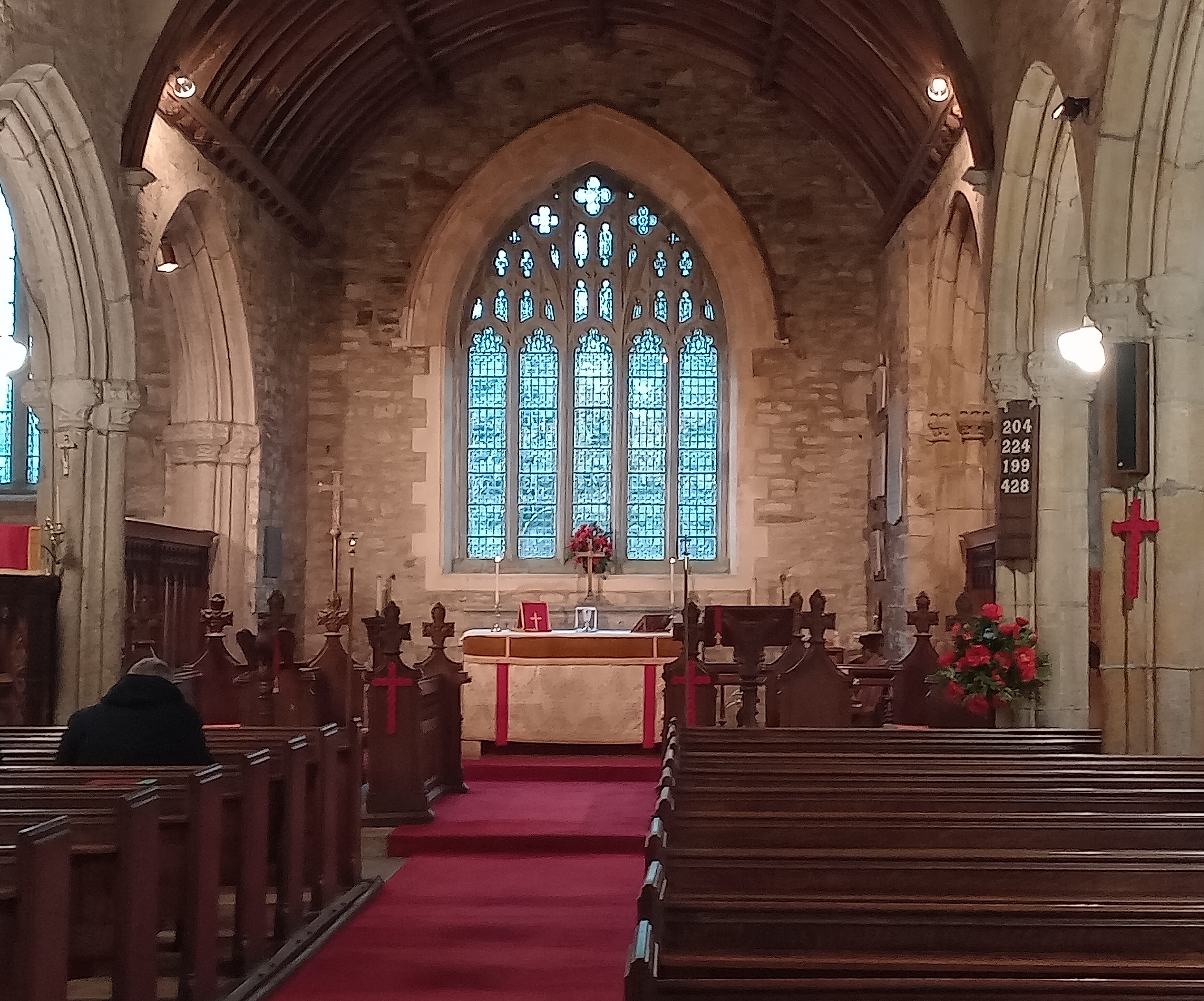
This is the text of a sermon preached on the Feast of Christ the King at St Melor’s Church, Linkinhorne, Cornwall.
The set readings were, Ezekiel 3411-16, 20-24 Ephesians 115-end Matthew 2531-end
The Feast of Christ the King, which we celebrate today, is a relatively recent addition to the Church’s calendar. Originally it was promulgated by Pope Pius XI in 1925. It only came to be included in the Church of England’s calendar when the three year lectionary, which we still use, was adopted in the late 1990s. It is now widely observed in most churches in the West – Catholic, Anglican, Methodist, Lutheran and many other Protestant churches.
As I was preparing this sermon I came across a poem, written by a Catholic Christian, critical of the feast. It is too long to read now – and to be honest it is not a very good poem – but it did get me thinking about the nature of Christ’s Kingship. If you want to read the poem I have put a copy of it at the back of the church.
So, what does the poet say? He points out, not unreasonably, that a fundamental of Jesus’ life and ministry is his humility.
Jesus, he says, is not a king like any earthly king, and yet when we speak of a king what images spring to mind? A man in royal robes, seated on a throne, a gold bejewelled crown on his head. Courtiers bowing, addressing him as, “Your majesty!” A wealthy man who lives in a palace and feasts on fine food and wine, waited on by servants. A man on whom authority is laid, who demands obedience from his subjects. A man who is not one of us, but someone set apart from birth and born to rule and brought up to understand the special place they hold in the world.
While that may not in every detail match the constitutional monarchy that we have in this earthly kingdom, neither is it so wildly different from what our monarchy looks like to the uncritical eye. And it is certainly true that the picture we have in our mind’s eye of a king is rather more medieval than an image of a modern constitutional monarchy.
And, in spite of some iconography of Christ in glory in which he is depicted sat upon a throne and wearing rich robes and, often, a crown, our image of Jesus is very different.
When we think of Jesus, or when we mention him to others, our image is, generally, of a man in middle eastern dress of the first century – a rough, plain robe, sandals, bareheaded, or of a preacher delivering his sermon on the mount, or teaching the crowds who followed him. Perhaps we’ll think of him welcoming the little children to him. Or, we’ll picture him carrying his cross or crucified upon it.
I read now just two verses from the poem,
Behold the wretch upon the tree:
Byword for grim poverty.
A man who drew official scorn,
Left to die, bereft, forlorn.
What has royal, courtly might
To do with such a ghastly sight?
Were his legions all defeated?
What great struggle left him unseated?
“Blessed are the poor in spirit”.
“The meek and lowly will inherit”.
Good news tailored for the least –
Not those quaffing at the feast.
“Come to me, you that are stressed;
Have no fear – you will find rest”.
Not the words of someone who
Is accessed by a wealthy few.
This may not be great poetry but it encapsulates well the Jesus we think of. No grandeur or splendour here, but a humble preacher who provokes the ire of power and authority, who favours the poor and powerless, who champions the victims of oppression and prejudice.
But it is this that is the nature of Jesus’s kingship that we celebrate today. For he is a king – he is our king!
He wears a robe, but it is a mocking robe of purple put around his shoulders by the same soldiers who poked cruel fun and beat him and nailed him to the cross. He wears a crown but it is a crown of thorns. A crown not of worldly power or respect but of the king who suffers and dies for us to save us from our sins. A king who bears our burdens to set us free. He carries an orb, but the orb is the world whose sinful weight he carries to the cross. And the sceptre he holds is the cross he carries to Calvary.
This is our King! And, as we heard in today’s gospel reading, he is a king who will judge us. He judges us for the way we respond to the needs of those around us. This is a judgement not just of actions, but of attitudes.
Do we care? Do we care for our neighbours? Do we care for the hungry and thirsty? Do we care for the homeless? Do we care for the sick? Do we care for poor? Do we care for the victimised, the refugee, the prisoner, the lost, the weak, the needy – whatever their need?
Because his judgement is all about whether or not we are modelling our lives on his, or whether we are more concerned about our own comfort, our security, our good fortune.
This parable of the sheep and goats is found only in Matthew’s gospel. And look how closely the ways in which we are judged correspond to the preaching of Jesus in his sermon on the mount. How the attitudes we are to have, and ways we are to behave mirror the judgements of the King who separates the sheep from the goats. And these attitudes and behaviours are demanded of us by Jesus’ teaching in the sermon on the mount.
That sermon, in full, is found only in Matthew’s gospel (parts of it are found in Luke’s). Matthew wants us to understand that these two pieces of teaching bookend Jesus’ earthly ministry. The sermon outlines what the King who lives by the standards he sets out expects of his people. They will be judged by those standards, those actions, those attitudes.
Jesus is our King! And how much more wonderful is his serving, caring kingship than any earthly model of kingship or authority?
Christ our King asks nothing of us other than to live our lives as he lived his – to model our lives on his.

