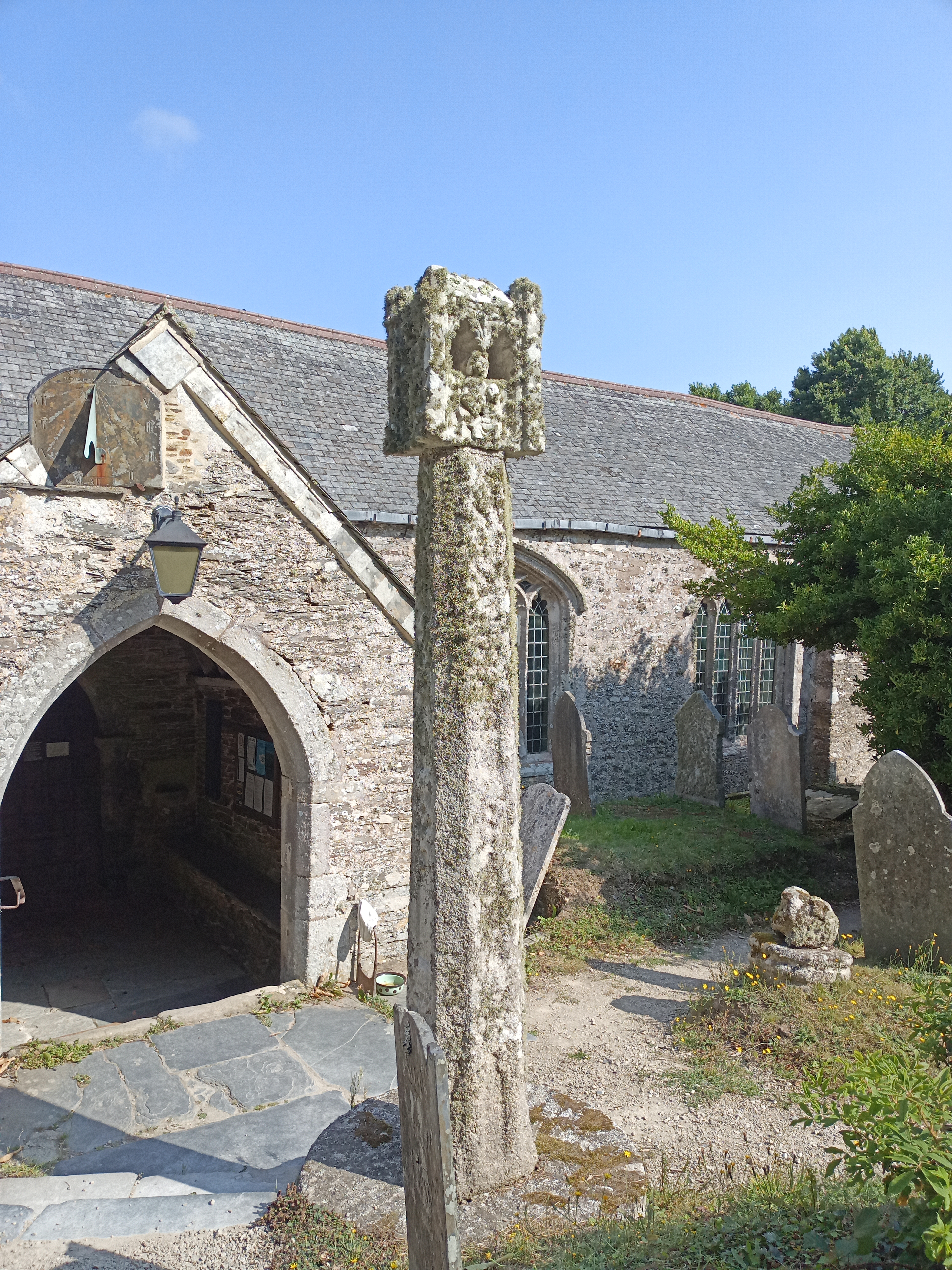
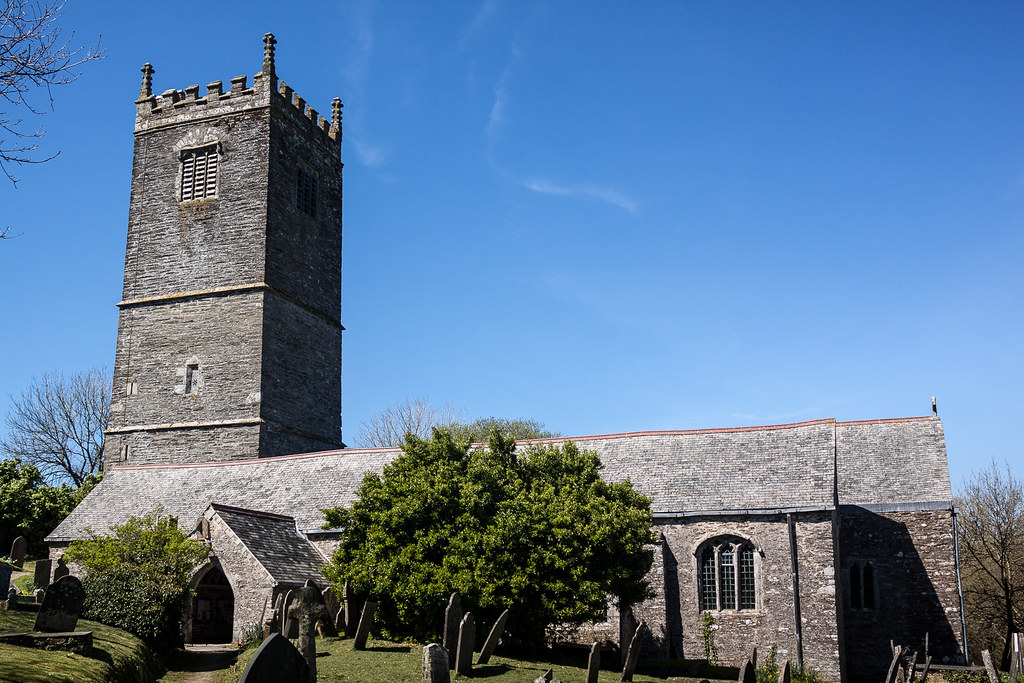
This is the text of a sermon preached St Tallanus Church, Talland, Cornwall on Sunday 24th August 2025

Today’s readings are, Jeremiah 14-10 Hebrews 1218-29 Luke 1310-17
One Sabbath day he was teaching in one of the synagogues, and there before him was a woman who for eighteen years had been possessed by a spirit that crippled her.
So far, so normal for Jesus. Teaching in the synagogue as is right for a prophet on the Sabbath. But this is no ordinary Sabbath day because Jesus is about to transform it, and make it day for turning lives upside down.
For the woman, a healing she can hardly have been able to imagine possible after all this time.
For the president of the synagogue a humbling experience, but also an opportunity to have his own life transformed by the truth which Jesus has come to reveal.
For the people witnessing these events a day they will never forget because they have seen God’s power at work before their very eyes.
Let’s take each in turn.
The woman has come to the synagogue as no doubt she did Sabbath after Sabbath. Perhaps, many years ago she had hoped that her prayers to be delivered from her suffering would be answered. But now, eighteen long years on she no longer dares to hope. No doubt she’s heard about Jesus and the miracles he has performed, but she expects nothing; she’s just a woman that nobody takes any notice of. Why would Jesus be any different. She doesn’t approach him; she doesn’t ask him to heal her; she’s just there to hear what he has to say.
But she’s mistaken. Jesus spots her in the congregation, calls her over and says to her, Woman, you are freed from your disability. He lays his hands upon her, she is healed and so gives glory to God.
More of her in few moments.
Now, the president of the synagogue becomes angry. Perhaps he had been looking forward to hearing Jesus speak; he’d heard such a lot about him. Was this new teacher all he’s been cracked up to be? Or is he just another teacher with strange ideas, who needs to be put in his place?
He turns on the woman and Jesus, criticising both, There are six days when work is to be done. Come and be healed on one of those days and not on the Sabbath.
He’s thinking of the fourth commandment, Remember the Sabbath day and keep it holy. For six days you shall labour and do all your work.
Jesus, though, is not having this misuse of the commandments. In a way reminiscent of his saying in Mark 2, The Sabbath was made for man, not man for the Sabbath, he rounds on the president of the synagogue – and probably those of the congregation nodding their heads in agreement with him, Hypocrites! He asks whether there is anyone there who does not untie their ox or donkey on the Sabbath and lead them to water. How is that OK but, and Jesus chooses his words carefully here, it is not OK for this woman to be loosed from this bond on the Sabbath?
At this the president and Jesus’ adversaries are put to shame.
And of the people who are present we are told only that they were overjoyed at all the wonders he worked. Not concerned now about what he should or should not do on the Sabbath but delighted at the wonderful works of God which he does through Jesus.
Jesus has done more for this woman than just healing her of her disability. He has given her value. He has restored to her a sense of her own self-worth. He has brought her out of her exclusion from society and allowed her to become someone again.
The society in which she lived put little value on women generally. But Jesus challenged that attitude frequently in his ministry. First, he noticed her in the synagogue. She would have been very used to being disregarded, not noticed and ignored. She was a member of society who had no value, who could contribute nothing. Her disability meant that she could not fulfil even the role of a woman of the time.
Not only does Jesus notice her but gives her a value to equal any man in the synagogue that morning, when he said to the president, This woman, a daughter of Abraham. She is a descendant of the Patriarchs – Abraham, Isaac and Jacob – equal to any man; a member of the people of Israel; a Jew. She matters to God, she matters to Jesus. The very least she deserves is to be loosed from her bonds just as the ox or donkey are. But now she has dignity; she has value in God’s eyes and that is what Jesus has truly restored to her.
Jesus has turned her life upside down. From a disabled person, dependent on the generosity of others to a person of real value who can once again be independent, someone who can contribute to the society in which she lives. From being a person of no account to being the equal of anyone in the eyes of God.
The president of the synagogue has been challenged by Jesus to see his faith differently. He can never again see things just in black and white – good and bad; valuable or worthless; man or woman, lawful or unlawful.
He can no longer use the law as the sole justification for the way he acts. He must now consider the effect of his actions on others. He cannot condemn the healing of a woman on the Sabbath simply because it’s the Sabbath. He must weigh up what is the right thing to do in the sight of God, asking is there a higher demand than keeping the letter of the Law? Is his response to God to be seen in obedience to the Law or in caring for others?
He has much to reflect on. His life can never again be the same because Jesus has changed that for ever.
The crowd too will be challenged by what Jesus has done. They may have enjoyed the spectacle of a miraculous healing and a row with the synagogue president, but they will have needed to reflect on all that has happened. Jesus did not do this for their amusement. Jesus has shown them too a different way of living which puts the needy and vulnerable at the forefront of their concerns.
It cannot be just a morning’s excitement. It must be a moment which changes the way they think about the world and about God.
This is more than a story about Jesus healing a woman who has been disabled for eighteen years. It reveals to us how an encounter with Jesus, however brief or, apparently insignificant can change our lives for ever. It was not just the woman who was in need of healing – it was everybody in that synagogue on that Sabbath day.
We believe that we encounter Jesus in our worship this morning. In what ways are we in need of healing? How will he turn our lives upside down today?