Tag: christianity

  • Keeping our eye on the ball

    This is the text of a sermon preached at St Nun’s Church, Pelynt on Sunday 10th August 2025

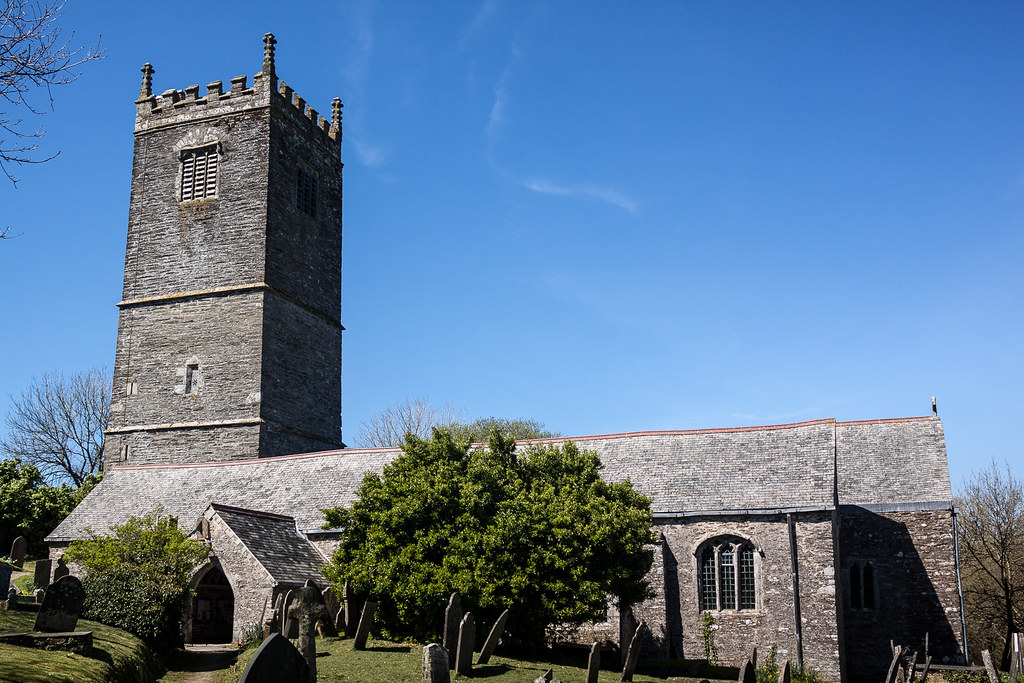
    St Nun’s Church, Pelynt

    The readings were, Isaiah 11, 10-20 Hebrews 111-3, 8-16 Luke 1232-40

    Where your treasure is, that is where your heart will be too.

    When I was learning to play cricket, a sport at which, for all my enthusiasm, I never really excelled, it was drummed into me that I should keep my eye on the ball. It was good advice too, even if I did occasionally fail to follow it. Taking one’s eye off the ball could result in a dropped catch or the ball whizzing past to the boundary, or, if batting, the dreadful clatter of wickets might well follow quickly. But there was more personal danger too. The cricket ball is very hard, and moves at pace; taking your eye off the ball can be very painful!

    In this morning’s gospel reading Jesus is giving his disciples similarly urgent advice. Indeed, so urgent is his advice that he repeats various versions of it three times.

    Where your treasure is, that is where your heart will be too.

    Blessed are those servants whom the master finds awake when he comes.

    You must stand ready, because the Son of Man is coming at an hour you do not expect.

    Jesus is clearly urging his disciples to remain focussed, to keep alert and always to be watchful. We need to ask though what exactly is it that we need to be so prepared for. And, it is not just one thing.

    The first of these warnings is not about something unexpected. It is a warning about being focussed on the right things. Having assured his disciples that the Father has given the disciples the kingdom Jesus continues to warn them of the conditions on which the kingdom is bestowed,

    Sell your possessions and give alms. Get yourselves purses that do not wear out, an unfailing treasure in heaven, where no thief comes near and no moth destroys.

    This is a development of last week’s warning that life does not consist in abundance of possessions, and the message against storing up wealth for ourselves rather than becoming rich with regard to God.

    Luke’s gospel has a great deal of emphasis on the dangers of hoarding riches rather than using them for the relief of poverty.

    Here we are clearly warned to amass our treasure, not in worldly wealth, but in heaven. And the way to do that is through giving alms, charity to relieve poverty and protect the vulnerable.

    Although we have the kingdom given to us it is a gift we can easily lose it by neglecting our duty, as Christian believers, to care for the poor and vulnerable in our society.

    The second warning is to keep awake for the return of the master from the wedding feast. Traditionally, this passage has been interpreted as urging us to be ready for the second coming of our Lord – and that is certainly the main focus.

    But it is what Jesus says that the master does when he arrives that I want to reflect a little on today.

    The master does not demand his servants wait on him, but he will do up his belt, sit them down at table and wait on them.

    This is a radical saying from Jesus. It is a complete reversal of the roles of servant and master. This surely recalls a saying of Jesus that comes a little later in Luke’s gospel (2227),

    For who is the greater: the one at table or the one who serves? The one at table surely? Yet I am among you as one who serves!

    Although the anticipation of the second coming is clear, we do, perhaps, see here too a reference to what happens when Christ comes to us in the sacrament of holy communion. Here he, our Lord, serves us as we rejoice in his presence among us.

    So it may be that Jesus is warning his disciples to be ready to welcome him in the sacrament.

    So this brief paragraph might have a double meaning for us, as for the readers of Luke’s gospel nearly two thousand years ago.

    And when Jesus talks about the master’s coming in the middle of the night, or when it is nearly dawn is he warning us that there could be moments when he will arrive unexpectedly – perhaps in the guise of someone in need?

    The third warning is very similar to the second. It seems a strange warning though. Clearly the emphasis must be on the unexpectedness of the Son of man’s coming, for surely we do not dread it in quite the same way as we might dread the appearance of a thief in the night.

    I think that the point Jesus is making is that being unprepared for his coming would be as disastrous for us (and possibly more so) than failing to secure our home against burglars. Perhaps Jesus is telling us to be as concentrated on protecting our place in the Kingdom as we are on protecting the place where we live.

    These three brief sayings contain much for us to consider. Are we focussed on the right things? Is our concern more for ourselves and our own comfort and security than it is for others? Particularly, are we using the gifts that we have been given in the service of the poor and needy, or are we simply storing them for a rainy day?

    Are we committed to being ready for the time when Christ comes to us? Not just at the second coming, but in the sacrament, and in the needy, broken or lonely.

    Is our life directed towards the Kingdom of God, or are we so consumed by the needs of this life that we neglect our place in God’s kingdom.

    These sayings of Jesus remind us to review our priorities and make sure that our heart is in our heavenly treasure, and not distracted by our earthly concerns.

  • Where is your treasure?

    The text of a sermon preached at St Marnarch’s Church, Lanreath, Cornwall

    St Marnarch’s Church, Lanreath, Cornwall

    The readings were Hosea 111-11 Colossians 31-11 Luke 1213-21

    Watch, and be on you guard against avarice of any kind, for life does not consist in abundance of possessions.

    It is hard to imagine guidance from Jesus that could be more clearly directed to our own time than this. Our modern society is built upon consumption. We are continually urged to acquire more and better possessions.

    Our modern economy is considered successful only if it is growing. When we switch on the TV, or social media – Facebook, Instagram, TikTok, or walk through our town centres, visit the cinema, read a newspaper or a magazine we are bombarded with advertisements. According to these advertisements we all need a new phone, a new TV, a gigantic fridge freezer, a new car.

    We are consumers and, according to society, we need to own more and better possessions. Jesus’ response to the man in this morning’s gospel reading,

    life does not consist in abundance of possessions

    challenges this view in the strongest terms.

    The parable that follows reinforces the message, as does Jesus’ remark that rounds it off,

    So it is when someone stores up treasure for himself instead of becoming rich with regard to God.

    The danger of riches is very much a theme in Luke’s gospel. We are all familiar with the Beatitudes in Matthew’s gospel. Luke also records beatitudes of Jesus. But where Matthew has,

    Blessed are the poor in spirit, for the kingdom of Heaven is theirs,

    and,

    Blessed are those who hunger and thirst for righteousness, for they shall be filled,

    Luke, in his version of the beatitudes has,

    Blessed are you who are poor, for the kingdom of God is yours.
    Blessed are you who are hungry now, for you shall be filled.

    and

    But alas for you who are rich, for you are having your consolation now,
    Alas for you who have plenty to eat now, for you shall go hungry.

    For Luke it’s just poor not poor in spirit, and hungry not those who hunger and thirst for righteousness.

    And many of the parables and sayings of Jesus that Luke records speak of wealth as a barrier to entering the kingdom.

    For where your treasure is, that is where your heart will be too. (1234)

    You cannot serve both God and money. (1613)

    How hard it is for those who have riches to enter the kingdom of God. (1824)

    But Jesus gives positive advice too about what to do with wealth.

    When the rich ruler comes to him and asks, what shall I do to inherit eternal life? Jesus tells him to keep the commandments, but adds, when he says that he has kept the commandments,

    You still lack one thing. Sell everything you own and distribute the money to the poor and you will have treasure in heaven; then come, follow me.

    There are a number of other references in Luke’s gospel to the importance of the giving of alms – supporting the poor through charity.

    Luke, in his gospel sees this duty as a part of acting with justice towards the needy and vulnerable.

    And this is surely the point that Jesus wants us to understand – that wealth is a blessing if it is used well. Selfish accumulation is wrong. It undermines God’s justice. We need to be aware of where our treasure lies.

    We should see our possessions as gifts to be used. We should see our wealth as something to be shared rather than hoarded.

    I don’t believe that Jesus is suggesting that we should be unconcerned for our security and comfort, nor does he require us to impoverish ourselves and live in poverty. But he does require us to understand that we have a responsibility, in God’s justice, to those who are in need.

    If we are indifferent to the needs of our neighbours; if we are unmoved by the plight of the hungry; if we look the other way when we see suffering then we are failing in our discipleship.

    If we are only interested in accumulation of wealth; in amassing possessions; in having the latest and greatest of everything then we are failing in our discipleship.

    The gifts we have are gifts to be shared for the benefit of others. If we’re artistic or musical we can share those gifts; if we have a gift of teaching we should teach; if we are good at leadership we should be a leader; if we can identify injustice in the world we should challenge it; if we are blessed with more than enough money we should help the poor and needy.

    Jesus’s teaching is very clear – particularly in Luke’s gospel.

    Indifference to the needs of those around us is sinful and a barrier to us entering the kingdom of God.

    Where we have been blessed by God we should share what we have. As Jesus said to the man in the crowd today,

    Watch, and be on you guard against avarice of any kind, for life does not consist in abundance of possessions.

    Abundance of possessions brings only the illusion of security. Failure to share brings rejection from God’s kingdom.

  • Choosing the Better Part

    This is the text of a sermon preached at the Church of St Wyllow, Lanteglos-by-Fowey on 20th July 2025

    St Wyllow’s Church, Lanteglos-by-Fowey, Cornwall

    Amos 81-12 Colossians 115-28 Luke 1038-42

    There is a legend about Martha and Mary that was popular in the Middle Ages. It tells how, after the resurrection Martha and her sister Mary travelled to France where they preached the gospel. The sisters went to a small town which was being troubled by a dragon. Martha manages to slay the dragon and in doing so the whole town is converted to Christianity. On the same trip Mary sets up a monastery in a remote area of wilderness.

    Martha is an activist and Mary a contemplative.

    We see much the same being played out in this morning’s gospel reading. There’s no dragon, of course, and no monastery either but Martha is the doer and Mary the listener.

    A first reading of this gospel story appears to show Mary as the one who is making a right choice and Martha is the one who misses the point, and makes a poor choice. We instinctively feel sympathy for Martha, having to do all the work while Mary just sits listening to what Jesus has to say. But, have we got that right? Is that what this story is about?

    Our gospels recently have been considering what it means to be a disciple. Two weeks ago we heard how Jesus sent out seventy disciples to proclaim the good news. Last week we heard the parable of the good Samaritan revealing what it means to love God and neighbour. And this story of Martha and Mary is also about discipleship – although that is not how it appears at first sight.

    As Jesus enters the village Martha welcomes him to her home. As you would with a guest she makes him comfortable and sets about preparing a meal. Mary meanwhile settles herself down at Jesus’ feet and listens attentively to what he has to say. When Martha complains that she is being left to do all the work Jesus answers,

    Martha, Martha, you worry and fret about so many things, and yet few are needed, indeed only one. It is Mary who has chosen the better part, and it is not to be taken from her.

    All we are told about Mary here is that she sat down at the Lord’s feet and listened to him speaking. This description is typical of the disciple, the one who learns from the teacher. Mary is learning from Jesus in order that she might be active in witnessing.

    This is a theme in Luke’s gospel. We read about the disciple who builds his house on the solid foundations of rock, rather than sand and is praised (646-49). In the parable of the sower it is the seed that falls in the good soil that thrives and grows (815). Jesus speaks of his true family as being those who hear the word of God and do it (821). Jesus says, Blessed rather are those who hear the word of God and keep it in response to the woman who shouts to him, Blessed the womb that bore you and the breasts that you sucked (1127-28).

    It is clearly the duty of the disciple to learn from Jesus and then to act. Here it is Mary who is doing that as she sits at the feet of Jesus. But Martha is acting. She has practical activities which show her devotion to Jesus.

    There is no criticism implied of Martha. She acts and acts well in serving the meal. She is showing hospitality and welcome. She is meeting Jesus’ physical need of refreshment. She is showing him kindness.

    However, Martha is being distracted by all the things she feels that she needs to do. She needs to consider what is best to do – to rush around setting the table, preparing food and drink or perhaps to spend time with her guest, talking and listening. That is what Jesus reminds Martha about. Her challenge from Jesus is to consider what is distracting her, what is keeping her from exercising her discipleship well. It’s about getting the priorities right.

    But, we do not hear the end of this story. What does Martha choose to do now. Does she go back to the kitchen, muttering under her breath that no-one helps her, that she has so much to do, while Mary just sits at Jesus’ feet, and Jesus only encourages her, and nobody understands her. Or, does she pour the wine, put the nuts and crisps on the table and settle down next to her sister?

    We meet Martha and Mary again – in John’s gospel. When Jesus raises Lazarus it is Martha who comes out to meet him, and chides him for delaying his journey until Lazarus has died, but expressing faith that Jesus could have saved her brother. And, when told that Lazarus will rise again and that Jesus is the resurrection and life professes her faith in Jesus, Lord, I believe that you are the Messiah, the Son of God, the one coming into this world. Martha has a strong faith. She knows who Jesus truly is – perhaps better than Mary.

    And again a few days later when Mary pours the ointment on Jesus’ feet and wipes them with her hair, it is Martha who has prepared the meal and has waited on them.

    Martha has a deep and strong faith, and puts her trust in Jesus, but she is also one of life’s busy people. She is a doer, she is driven and an activist. Mary, on the other hand, is contemplative, a listener.

    These are the two sides of the coin of discipleship. Contemplation, reflection, putting ourselves in the presence of Christ in prayer, silence and stillness is important. It is a necessary part of being a follower of the Way. But on its own it is not enough.

    We also need to be active. Caring for the needy, feeding the hungry, campaigning for justice, healing the sick, making people whole.

    The one without the other is an empty, incomplete faith.

    This story reveals the importance of the contemplative life but it does not raise it above the active life in importance, because both are needed.

    If we read this story of Martha and Mary as a rejection of Martha’s way and a promotion of Mary’s way we misread it.

    Most of us are either, by nature reflective and contemplative or busy and active. And most of us will focus on the one more than the other. That’s OK. But if we get distracted by many things, or become so engrossed in contemplation, we miss the point.

    If our contemplation and reflection does not lead us into action. And our activity does not drive us to prayer and contemplation we will be poor disciples.

    God is calling us to both, just as Jesus called Martha to both in this short story.

  • Peace, But Not as the World Gives

    This is the text of a sermon which was preached at St Neot on the Sixth Sunday of Easter

    These were the readings Acts 169-15 Revelation 2110, 22-225 John 1423-29

    Peace I leave with you; my peace I give to you. I do not give to you as the world gives.

    We saw a few weeks ago that Jesus greeted his disciples, on the day of his resurrection, in the upper room with the words, “Peace be with you.” He did it again the following week when Thomas was present with them. Paul greets the churches he writes to with the word “peace.” He does so in his letters to the Romans, both of his letters to the church in Corinth, to the Galatians, to the Ephesians; in fact every one of his letters begin with that greeting. It was a conventional greeting among the Jews of his time, just like our, “How are you?”, “I’m fine.”

    In today’s gospel Jesus changes what that greeting means as he says to his disciples, Peace I leave with you; my peace I give to you. I do not give to you as the world gives.

    What did it mean then? And, what does it mean now?

    When a Jew greeted a friend in the time of Jesus Peace be with you meant something very similar to How are you? It carried ideas of soundness of body, a hope that the person greeted is in good health, that all is well with them.

    But Jesus here extends its meaning, I do not give to you as the world gives. This is now not just a greeting, a way of initiating a conversation. It’s not just politeness. Now, it is about Christ’s gift to us.

    As always, we need to look carefully at the context in which Jesus offers this new gift to his disciples – and through them to us.

    This saying of Jesus occurs in that long discourse in John’s gospel which takes place at the last supper. The discourse is Jesus’ valedictory words to his disciples; it prepares them for what happens after his resurrection.

    There are three key sayings of Jesus up to this point in this discourse in John’s gospel,

    I give you a new commandment: love one another; you must love one another just as I have loved you. It is by your love for one another that everyone will recognise you as my disciples.

    I am the Way; I am Truth and Life. No one can come to the Father except through me. If you know me you will know my Father too. From this moment you know him and have seen him.

    Those who love me will keep my word, and my Father will love them, and we will come to them and make our home with them.

    Like so much of what he says and does the disciples can only fully understand when they look back after his resurrection. But although Jesus must leave them they will not be alone, that was Jesus’ promise to them,

    The Advocate, the Holy Spirit whom the Father will send in my name, will teach you everything and remind you of all that I have said to you.

    And,

    Peace I leave with you; my peace I give to you. I do not give to you as the world gives.

    We have the gift of the Holy Spirit, and the gift of Christ’s peace to make these sayings of Jesus not mere words but deep experiences for us in which these words of Jesus are truly fulfilled in our lives.

    The Holy Spirit will remind us and teach us all that we need to remember and know. (We’ll reflect more on this as we approach the feast of Pentecost in two weeks time.)

    The peace that Jesus gives is the very presence of God with us. It’s not the sort of peace that the world gives (an absence of conflict, noise and clamour), but a peace that only God can give. It is a peace which comes from our being the place where Jesus and the Father make their home. The peace which comes from having God dwelling in our hearts.

    This peace that God gives doesn’t simply wish us good health or wholeness – it makes us whole, it is healing, it is renewing, it forgives our sins, it puts us in a right relationship with God and with each other.

    When we share the peace in a few minutes we will be sharing the peace which God gives. It’s not just about wishing each other well it’s about healing our relationships and putting us right with each other – so that we can be right with God – as we read in the first letter of John (420b), whoever does not love the brother or sister whom he has seen cannot love God whom he has not seen. So to be put right with God we need to be right with each other. The peace which God gives does that for us.

    God’s peace means that we can love one another, as Jesus commanded. It means that we can truly know God and Jesus as the Way, the Truth and the Life. It means that we can become the place where God and Christ make their home.

    The peace which Jesus gives is a gift which transforms who we are, which makes us Christians and, most importantly, makes God present in the world through us. Each one of us.

    We are the dwelling place of God and of Jesus.