Category: Uncategorized

  • One day at a time

    One day at a time

    We are just a few days into a new year. New years are strange things. Nothing changes between December 31st and January 1st but there is a palpable sense that there is a new beginning, an opportunity for things to be different. Hopes are expressed that the new year will be happy and prosperous (by implication unlike the old year just ended) and we often resolve to eat more sensibly, to drink less, to exercise more, to be less judgemental, to be more patient, to read more, to watch TV less, to sort out the attic, to paint the hall – but by about now we know that those things are not going to happen; life will continue exactly as before.

    Changing our life always seems harder than we thought but transformed lives lie at the very heart of our Christian faith. Paul describes becoming a Christian as a completely new life and as a leaving behind of our old life. How can we who died to sin go on living in it? Do you not know that all of us who have been baptized into Christ Jesus were baptized into his death? Therefore we have been buried with him by baptism into death, so that, just as Christ was raised from the dead by the glory of the Father, so we too might walk in newness of life (Romans 6.2b-4); So if anyone is in Christ, there is a new creation: everything old has passed away; see, everything has become new! (2 Corinthians 5.17). Jesus too speaks of change being a requirement for discipleship, If any want to become my followers, let them deny themselves and take up their cross daily and follow me (Luke 9.23). (more…)

  • Sometimes reading the Bible is hard

    Sometimes reading the Bible is hard

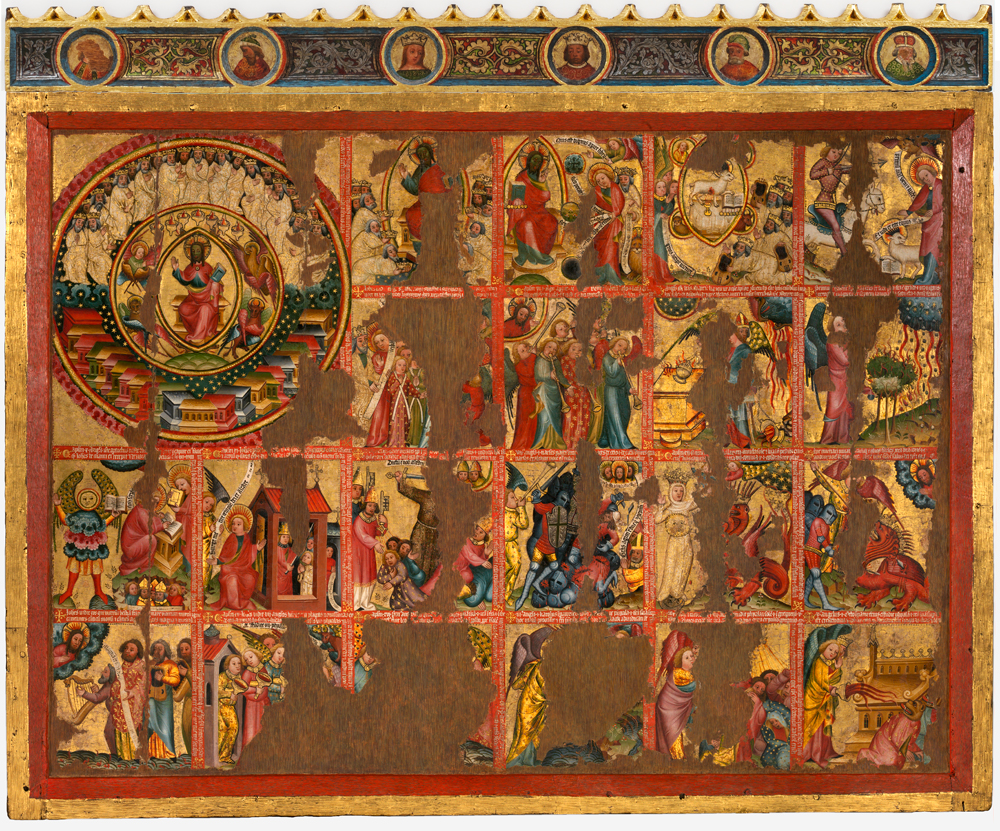
    At Morning Prayer throughout November we have been reading the Book of Revelation. To be honest I can’t say that I’ve been enjoying it. Its world view, its philosophical assumptions, its literary style, its imagery are all so far removed from my own experience and understanding that I find it difficult to access and even to make sense of.

    I’m not alone. Throughout Christian history the place and authority of the Book of Revelation has been disputed. To this day some Eastern Churches do not include it in the canon of New Testament books. It is not read in the Divine Liturgy of the Eastern Churches, although it is read in Catholic and Protestant liturgies. Martin Luther, at the time of the Reformation called it neither apostolic nor prophetic, John Calvin wrote commentaries on every book of the New Testament – except Revelation. (more…)

  • Reading the signs of the times

    Reading the signs of the times

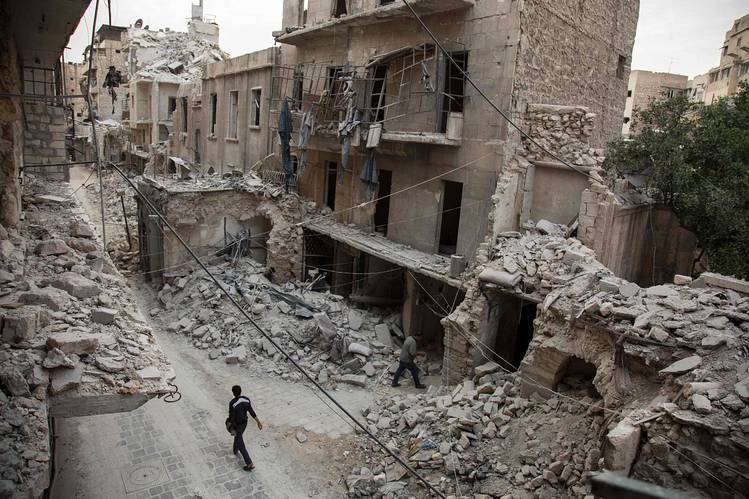
    The news always seems to be full of talk about events around the world that gives us pause for thought. Last week it was the havoc wreaked in Haiti by Hurricane Matthew (why do we name them? Is it to make them seem friendlier, less scary?) and this week it’s news again of the truly awful situation in Aleppo and the constant bombing of the east of the city and the villages around it. The loss of life and the images from both events are truly distressing and alarming.

    The situation in Syria can, and probably should, make us angry for a whole host of reasons. How can Russia give not only succour, but military assistance to the murderous regime of President Assad? Why has the west stood by and allowed the slaughter of innocent people to carry on for so long while apparently taking so little action? Why do we tolerate the political position that makes a friend of the enemy of my enemy regardless of the morality or lack of humanity of that “friend”? Why do our leaders so often engage in rhetoric that tars a whole group of people with the same brush so that now any action the West might take in the region feels like waging war on Islam? Why do we stand by while political leaders create fear by blaming racial groups, or religious groups, or political groups for the problems faced by our nations and our world? Why do we sell arms to nations with dreadful human rights records? Why do we train their armies? Why can our leaders not see how wrong that might be? Why will the nations of the West refuse to take responsibility for their past actions creating a refugee situation that is now out of control – and for good reasons? I could go on for there are many more questions that we can ask of our leaders, our multinational businesses and ourselves. And I confess that I have no idea how to answer these questions – or at least not in a way that could even come close to bringing about lasting change in the our world. (more…)

  • Magnificat

    Magnificat

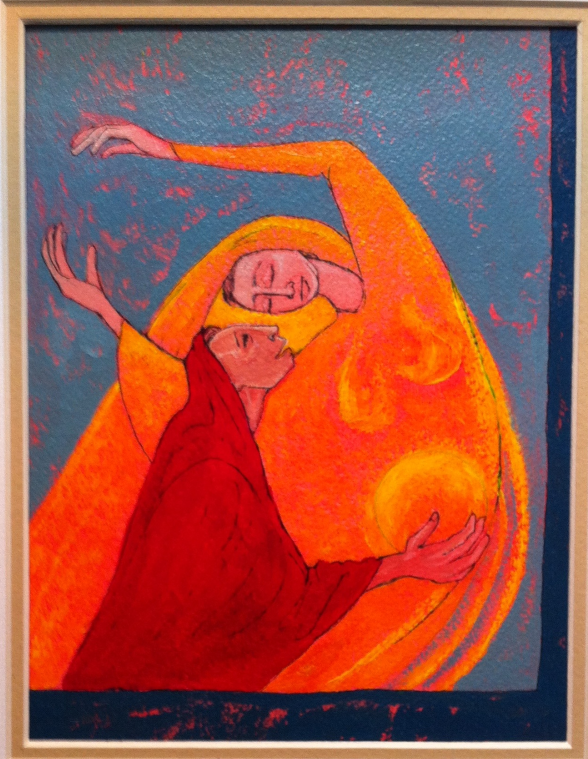
    The 15th August (the day that I’m writing this blog) is the Feast of the Blessed Virgin Mary. In the Catholic Church it’s the Feast of the Assumption of Mary, in the Orthodox Churches it’s the Dormition (or Falling asleep) of Mary, but in the Church of England it is just the Feast of the Blessed Virgin Mary.

    There can be no doubt that the place of Mary in the piety of the church has been a bone of contention, especially between Catholics and Protestants, for centuries. Today, in the C of E some churches will call today the Assumption, others the Falling Asleep, others will probably ignore it altogether. (more…)

  • I bind unto myself today

    I bind unto myself today
    the strong name of the Trinity. (att. St Patrick)

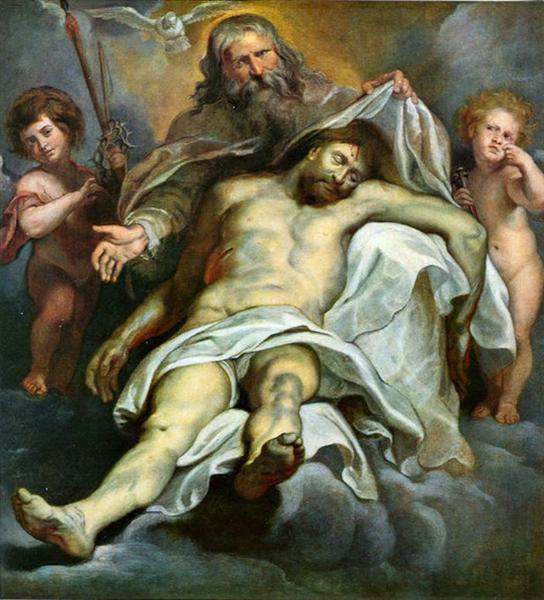
    What sense can we make of the doctrine of the Holy Trinity? I suppose most of us would say, ‘Not much!’ And yet, everywhere we look the Trinity pops up as if to mock us for our lack of understanding. There it is in our prayers – through Jesus Christ our Lord, who is alive and reigns with you and the Holy Spirit. There it is in our hymns – praise Father, Son and Holy Ghost. There it is as we begin

    holy-trinity.jpg!Large
    The Holy Trinity – Peter Paul Rubens

    our worship – In the name of the Father, and of the Son, and of the Holy Spirit. And there it is, of course, when we baptize new Christians – I baptize you in the name of the Father, and of the Son, and of the Holy Spirit. Everywhere we look, it’s there. There’s no escaping it. (more…)

  • Welcome to Lent

    We often describe Lent as a season of Fasting. But, in truth, fasting has fallen out of favour. Now, rather than fasting, we are likely to give up something for Lent – biscuits, cakes, wine, sweets. Increasingly we are encouraged to take on something for Lent – more prayer, more bible reading, more charitable work. All of this is good but I want to suggest that there is still some benefit to be had by fasting.Lent

    The dictionary definition of fast is: Abstain from all or some kinds of food or drink, especially as a religious observance.

    So what are the benefits to us of abstaining from food or drink? (more…)

  • I love Christmas, but …

    I love Christmas. But I often feel that the Christmas I love and the Christmas I celebrate do not always seem to be the same thing … and I don’t think that I’m alone in this.

    The Christmas I celebrate has two main features – Church and family. That’s good. That’s a big part of what I love.

    Nativity_CD_Reredos
    Detail from the Reredos in St Mary’s Church, Chilthorne Domer

    I love exchanging presents. I love Christmas dinner – with all the trimmings. I love the tree, the crib, the cards (well, most of them, anyway). I love the traditions. (more…)

  • What shall we do with all these Churches?

    St_Gargoyles1On Friday in the Guardian Giles Fraser wrote in his Loose Canon column that the Church of England needed many fewer Churches. He suggested that if the Church of England were in a position to spend less time, energy and money on maintaining its many thousands of ancient beautiful and loved parish churches it would be able to give more time and attention to its most important work – proclaiming the gospel. He said that we need someone to do the same job for the Church of England as Lord Beeching had done for the railways in the 1960s.

    By coincidence, in the Church Times on the same day, there was a report of Justin Welby, the Archbishop of Canterbury preaching at the consecration of a new chapel at Virginia Theological Seminary in the United States, their old chapel having burnt down in 2010. Here the Archbishop posed the question, “Why is it that we are so addicted to buildings?” He said that sometimes the buildings are the servants of the Church and at others they are the Church’s “tyrants.” (more…)

  • Required – the Wisdom of Solomon

    The Anglican Communion is in crisis. That’s not really news, it’s been in crisis for many years.

    The Anglican Communion is a grouping of national and regional churches which are in full communiCompassroseon with the Church of England. It grew out of the the British Empire as the Church of England sent, first, missionaries and then bishops to establish outposts throughout the empire. Those new churches eventually became autonomous and, modelling themselves on the Church of England and their worship on the Book of Common Prayer. It is often claimed that the Anglican Communion came into existence with the ordination of Samuel Seabury as the first Bishop of what is now the Episcopal Church of the United States of America (ECUSA). The first Lambeth Conference (the meetings of the Anglican Bishops from around the world) was in 1867. The ties that bind these churches together are loose and born largely of mutual respect and a broad agreement on matters of doctrine. Traditionally the Anglican Communion has treasured its Union in Diversity bound only by it’s four Instruments of Communion: (more…)

  • My Father was a Wandering Aramean

    My father was a wandering Aramean (Deuteronomy 26.5). These words are a reference to Jacob. His grandfather Abraham lived a nomadic lifestyle. He drove sheep and wandered from place to place, setting up camp where he found good pasture. Sometimes he stayed for a short tRefugees_on_a_boatime and sometimes he remained for weeks, months or even years. But nowhere did he settle long enough to call it home. His son Isaac and his grandson Jacob (who was renamed Israel) lived this same nomadic lifestyle. In this way they accumulated great wealth but called nowhere home.

    But they travelled always with a promise. God had made a covenant with Abraham in which he promised that Abraham would be the father of nations (it’s what his name means) and that God would provide him with a homeland and that his descendants would become a people beyond counting and a blessing to the world. (more…)