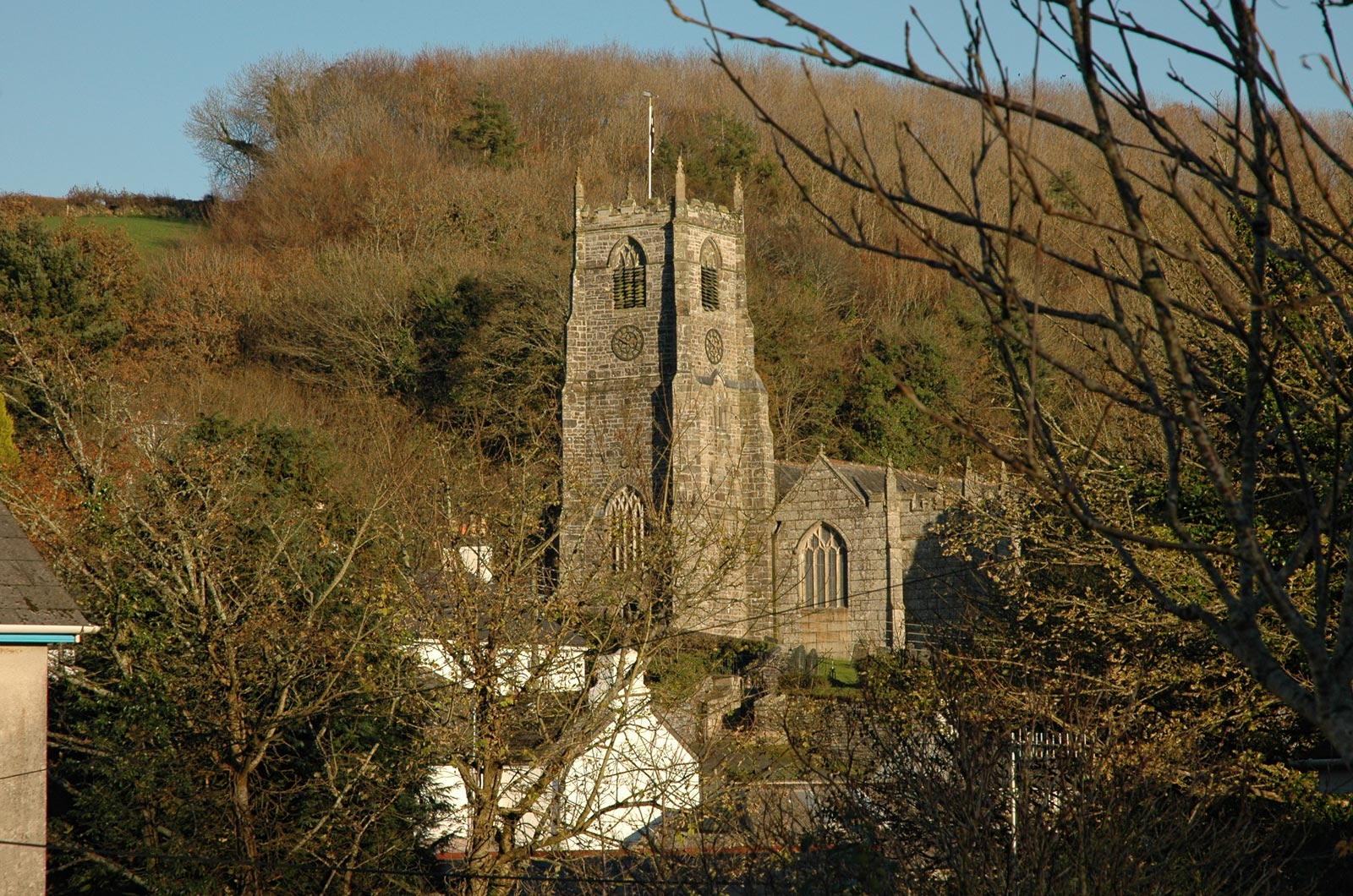
This is the text of a sermon delivered in the Church of St Bartholomew, Warleggan and the Church of St Neot, Cornwall. The readings appointed were, Exodus 2412-end 2 Peter 116-end Matthew 171-9
George Mallory, who died in 1924 on his third attempt to climb Everest, when asked why he wanted to climb the mountain famously replied, “Because it’s there.”
Mountains undoubtedly have a strong grip on the human imagination. People climb them, they ski down them, they paint them, they photograph them, they write legends about them, they compose symphonies about them, they imagine them to be homes of their gods, sometimes they even worship them as gods.
I suppose it’s the sheer size of them, the effort required to reach their summits, the imposing grandeur of them.
In Matthew’s gospel Jesus ascends a mountain three times. The first time it is to deliver his famous sermon on the mount,
Seeing the crowds, he went onto the mountain. And when he was seated the disciples came to him. Then he began to speak.
He ascends a mountain again at the end of the gospel when he appears for the last time to his disciples,
The eleven disciples set out for Galilee, to the mountain to which Jesus had directed them. When they saw him they worshipped him, though some hesitated. Jesus came up and spoke to them. He said, “All authority in heaven and earth has been given to me. Go, therefore, make disciples of all nations…”
The third occasion is recorded in today’s gospel reading – the seemingly strange story of the transfiguration.
Jesus took with him Peter and James and his brother John and led them up a high mountain on their own. In their presence he was transfigured: his face shone like the sun and his clothes became as dazzling as light.
These events which take place on mountains are all key moments in the life of Jesus.
On a mountain he delivers the central messages of his teaching. On a mountain his glory is revealed to his closest disciples. On a mountain he takes his leave of his disciples, commissioning them to continue the proclamation of the gospel and to make, and baptise, more disciples.
But it is the second of these events that we are concerned with today.
Jesus leads his closest disciples – Peter, James and John – up the mountain where he is transfigured. His appearance is changed and his face shines like the sun. His clothes become dazzling as light. This is unmistakably an image of glory. The three disciples are seeing Jesus, not as a mere man, but as the Son of God, as his divine nature is revealed in his transfiguration – and the voice heard from heaven confirms this truth,
This is my Son, the Beloved; he enjoys my favour. Listen to him.
These words were spoken at his baptism by John, but that was before these disciples had been called. These words are for their benefit – and they clearly made an impression as Peter recalls them in his second letter (2 Peter 116-17),
we witnessed his majesty with our own eyes. He received glory and honour from God the Father, when a voice came to him from the transcendent glory, “This my Son, the Beloved…”
And through all this time Jesus has been accompanied on the mountain by two great heroes of the Old Testament – Moses and Elijah. Representatives of the Law and the Prophets.
They had both had their own visions of God’s glory on mountains.
Elijah, when he was fleeing the wrath of Ahab and Jezebel. He hid in a cave on Mount Horeb and the Lord passed by and Elijah was strengthened by the Lord’s appearance in the still, small voice.
Moses was called up onto Mount Sinai to receive the Law. In the presence of the Lord on the mountain Moses’ face became so radiant because he [the Lord] had been talking to him. He covered his face when he came down the mountain and removed the veil when he went up the mountain to speak with Lord.
The significance of both the mountainous location of the transfiguration and the appearance of these two figures from history will not have been lost on Matthew’s Jewish audience (Matthew certainly targetted his gospel to Jewish Christians).
Mountains are places where God is encountered, and are associated, through Moses and Elijah with the the revelation of his glory.
Moses ascends the mountain to receive the Law and Jesus, the new Moses, delivers his new Law on the mountain.
The Jews believed that Elijah would return before the great and awesome Day of the Lord. The prophet Malachi tells us so in the very final verses of the book of the Old Testament that bears his name. So his appearance here with Jesus would support Christians’ claims that Jesus is the Messiah in the minds of the Jewish converts Matthew was writing for.
This is the purpose that this story has for Matthew and the Christians he was writing for, but what does it say to us today? Why does it matter for us that Jesus was transfigured?
Jesus, by the way he lived and the things he said set us an example of how to live in the way God requires of us. But, important though it is, that is not principally what Jesus is about.
The context of this short story in Matthew’s gospel is important. In the preceding verses Jesus has asked his disciples, who do you say I am? Peter answered him,
You are the Messiah, the Son of the living God,
And then, having praised Peter for his perception, Jesus makes the first prophecy in Matthew’s gospel of his passion,
Jesus began to show his disciples that he must go to Jerusalem and suffer grievously at the hands of the elders and chief priests and scribes and to be put to death and to be raised up on the third day.
Then, from this point Jesus’ story becomes more and more focussed on his death and resurrection.
In this context this story of transfiguration becomes a vision of what will be true about Jesus in eternity because of the death and resurrection of Jesus. It’s a glimpse of his glory before the resurrection.
It is what John, who let’s not forget was on the mountain with Jesus, said in the prologue of his gospel,
The Word became flesh, he lived among us, and we saw his glory, the glory that he has from the Father as only Son of the Father, full of grace and truth.
Many commentators have suggested that the story of the transfiguration could have been a resurrection story which – by accident or deliberately – has become misplaced. A theory supported by an account of the resurrection itself in the apocryphal Gospel of Peter which bears a remarkable similarity to this account of the transfiguration.
This story is told to make clear to us who Jesus is.
It says that what is really important about Jesus, and what Jesus’ life is really all about is his death and resurrection and what that achieves for us.
We’ll have plenty of opportunity to reflect on that during the next three months, of Lent, Holy Week and Easter.
But for us today it is enough to be reminded that Jesus, the incarnate God, died on the cross and rose again for our salvation.
And, because the death and resurrection of Jesus makes sense of everything from the story of the creation in Genesis to the account of the heavenly Jerusalem in Revelation, that is what this story does – it tells us that this is all about Jesus’ death and resurrection and our salvation!
 exultemus
Leave a comment